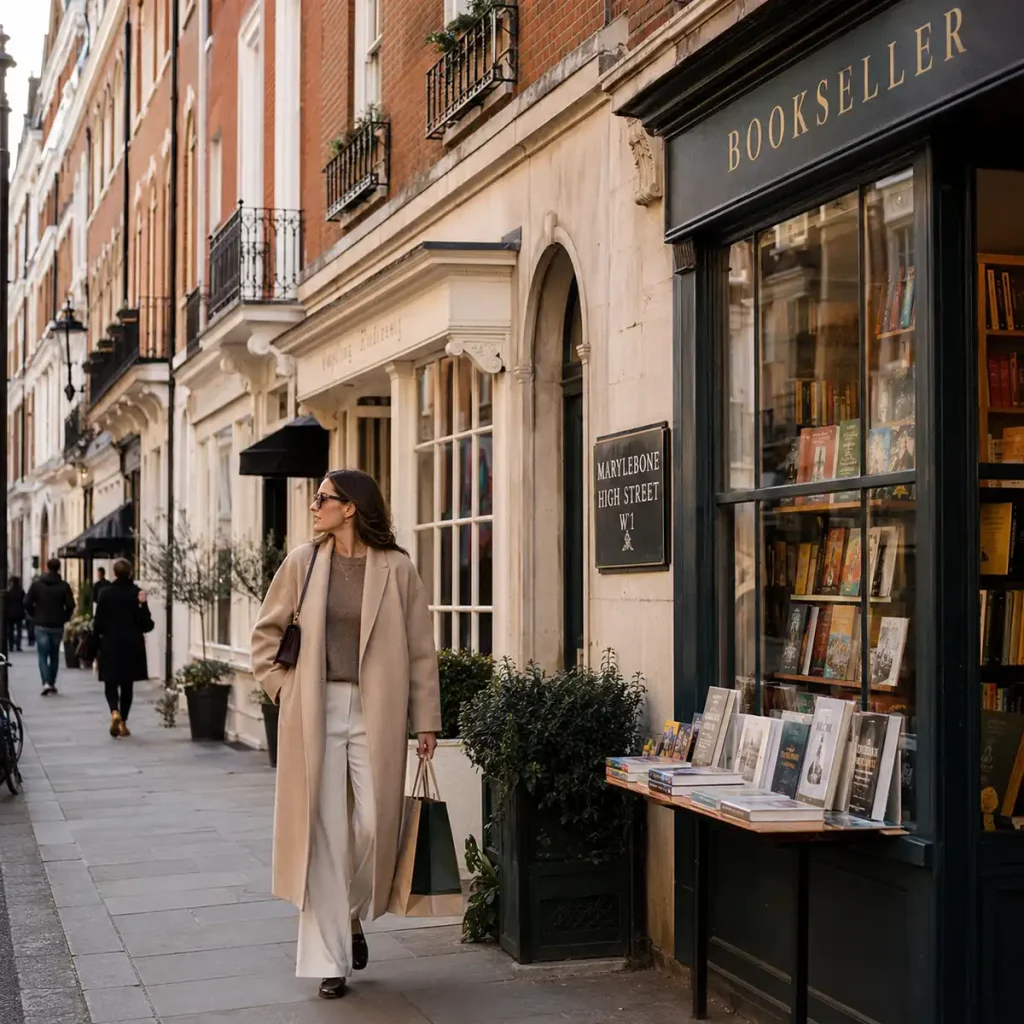
Walk north from Baker Street station and turn onto Chiltern Street, and the visual temperature of London drops several degrees. The red-brick Victorian architecture, the cherry-red planters, the absence of chain retail, and the particular calm of a street that runs parallel to the Marylebone High Street axis without competing with it: this is a shopping environment with a distinct character. The Chiltern Street shops in 2026 represent a concentration of specialist retail that rewards the visitor who arrives with a clear idea of what they are looking for, and occasionally converts the visitor who arrives without one.
The street runs from the junction with Paddington Street in the north to its connection with George Street and the Baker Street Station exits in the south. This short stretch, barely 400 metres end to end, contains a range of boutiques, specialist retailers, and food addresses that is disproportionate to its length. What makes it worth the detour from Marylebone High Street, which runs parallel 5 minutes’ walk to the east, is the editorial curation of its retail occupiers: independent operators with a defined point of view, specialists who have chosen this street for reasons that have to do with community and character rather than footfall.
What Makes Chiltern Street Different from Marylebone High Street
The key distinction between Chiltern Street and Marylebone High Street is the nature of the retail curation, not simply the number of shops. Marylebone High Street accommodates a wider range of retail from the established luxury international brands to the genuinely independent, managed across the Howard de Walden estate with care. Chiltern Street has a narrower, more deliberately specialist character: it is where the menswear enthusiast, the serious coffee drinker, the fragrance collector, and the architectural design observer tend to find themselves.
Trunk Clothiers at 8 Chiltern Street is the clearest expression of what makes this street work. Fifteen years of operation have established it as one of the most respected independent menswear addresses in London, built on a buying philosophy that prioritises craft, natural fibres, and longevity over seasonal trend cycling. The Made to Measure suite at Trunk is a genuine service rather than an upselling device: Fox Brothers flannel, Holland and Sherry fresco, and Loro Piana wool go into garments made for specific posture and shoulder geometry. Over 80% of the range uses natural fibres; approximately 70% is produced within Europe. The quiet confidence of the shop floor, the soft jazz, the warm oak shelving: these are not styling choices, they are expressions of a retail philosophy.
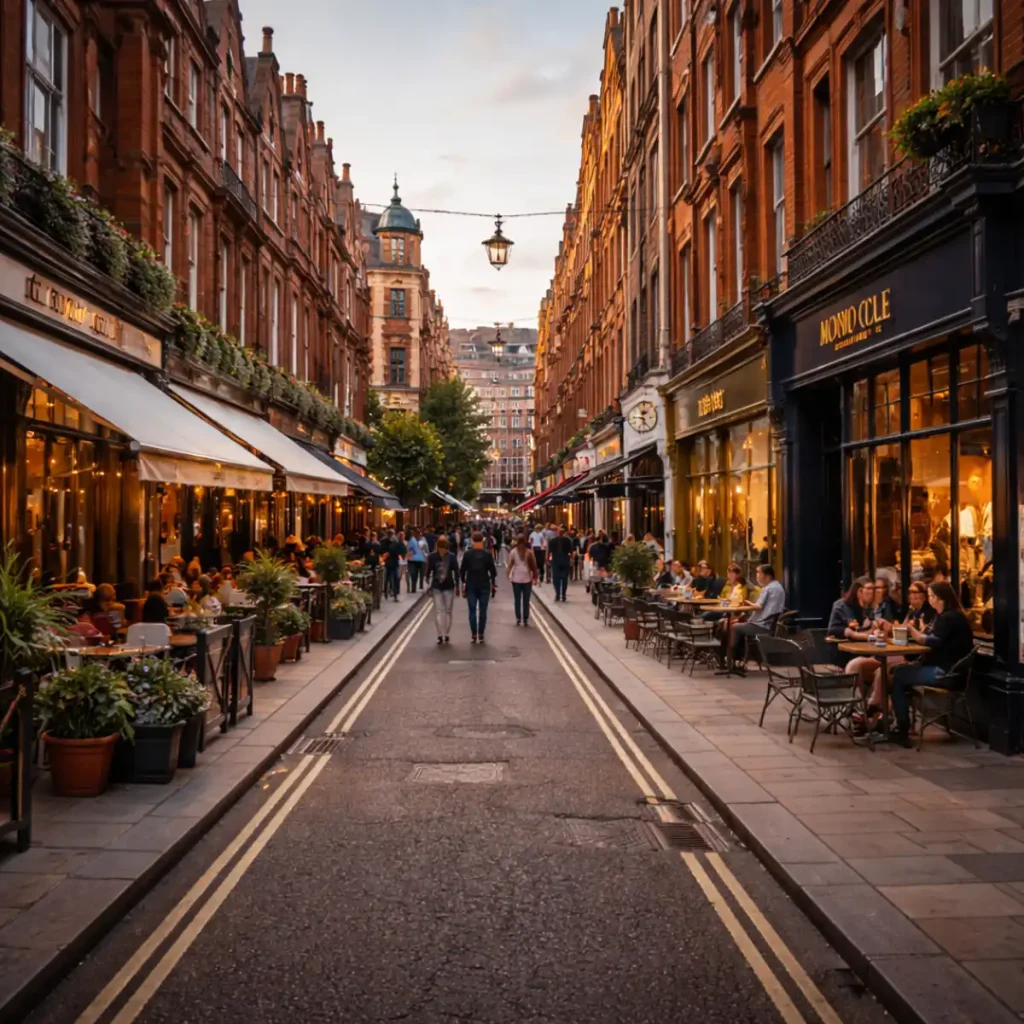
Monocle Cafe at 31 Chiltern Street anchors the street’s northern end and serves simultaneously as the lifestyle brand’s retail outpost and as the social centre of the street. The Swedish cinnamon buns, the carefully curated magazine and product selection, and the particular kind of international creative professional who gravitates to the address make it a useful barometer for the street’s appeal: if Monocle Cafe is your kind of shop, Chiltern Street is your kind of destination.
Menswear and Tailoring on Chiltern Street
The Chiltern Street shops offer the most concentrated independent menswear offer in central London outside of Savile Row. Trunk Clothiers leads the field, but the street’s strength in this category extends beyond a single address.
Dashing Tweeds at its Chiltern Street address represents a specifically modern take on British tailoring: the brand designs its own cloth, combining traditional tweed construction with contemporary cycling and urban functionality. The result is garments that are genuinely wearable as everyday wear rather than occasional pieces, which is a distinction that matters for a buyer at the quality end of the market. Made-to-measure options are available for both menswear and womenswear, with the full tailoring process taking approximately 8 to 10 weeks.
TWC, the menswear and lifestyle brand with its Chiltern Street presence, occupies a position between Trunk’s quiet luxury and the more overtly fashion-conscious menswear market. The buying is confident, and the quality level is consistent; the price point sits below full bespoke but above fast fashion, in the range where a considered buyer looking for garments that will last several seasons makes their most interesting decisions.
Fun fact: Chiltern Street is named after the Chiltern Hills in Buckinghamshire, reflecting the historic road that once ran from London towards that area. The street’s Victorian-era architecture dates largely from the 1880s and was developed as part of the expansion of the Marylebone residential district under the Portland estate.
Independent Boutiques and Specialist Retail Worth Finding
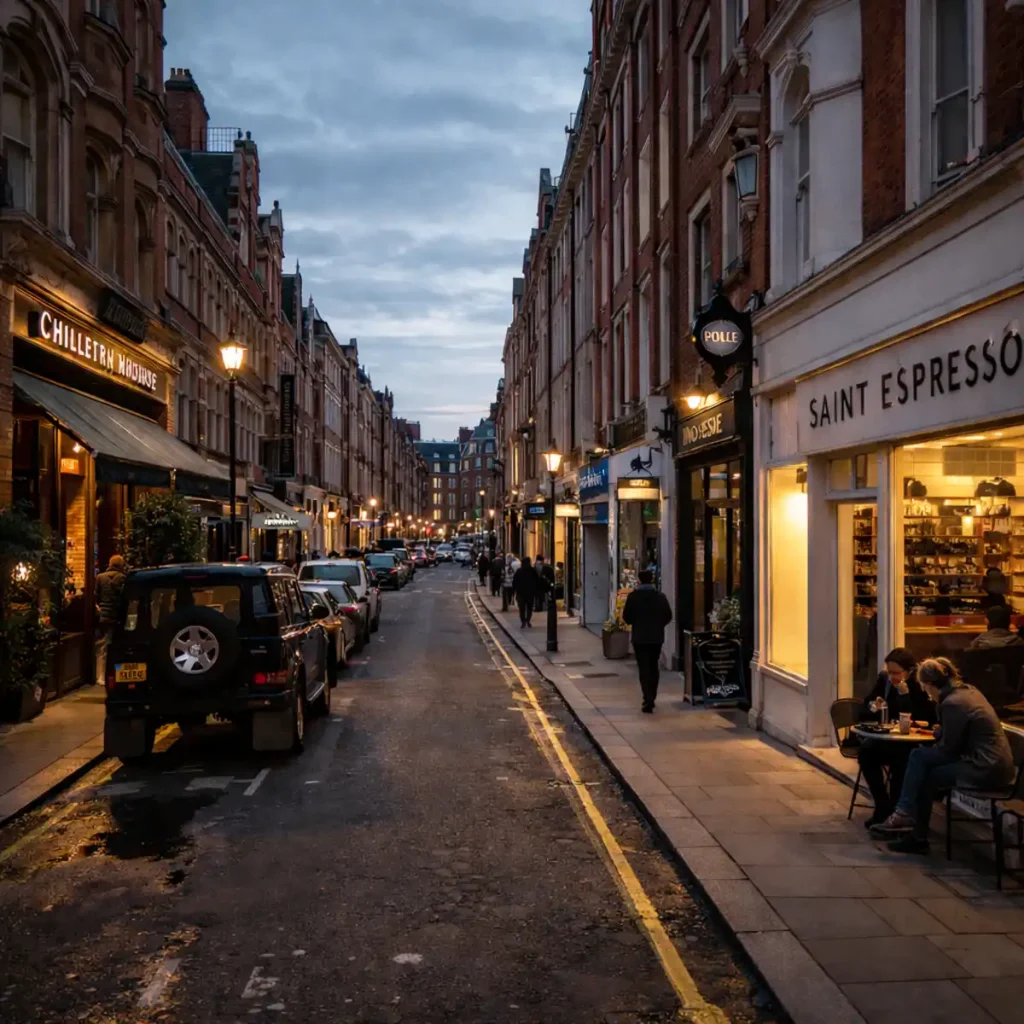
Beyond the menswear category, Chiltern Street rewards the visitor who walks its full length and takes the time to look at what occupies the spaces between the anchor addresses.
The fragrance and personal care sector is well represented. Several independent beauty and grooming addresses on or immediately adjacent to Chiltern Street carry independent and niche fragrance brands that have no presence on the mainstream retail circuit: lines from small-batch perfumers, specialist skincare ranges not stocked in department stores, and grooming products from independent makers who chose Marylebone for its sympathetic audience rather than its footfall. These are the addresses worth spending time in if you are building a fragrance wardrobe or looking for skincare that is not already familiar.
Fabriano Boutique on Chiltern Street brings centuries of Italian papermaking heritage to the street. The brand began in Fabriano, Italy, in 1264, and the Marylebone address stocks the full range of handcrafted notebooks, writing papers, and stationery that the family business produces. For the visitor who still writes by hand, or who gives gifts to people who do, this is the most distinctive address on the street and one of the more genuinely singular retail experiences in central London.
Chiltern Street Food and the Shopping Rhythm of the Street
The Chiltern Firehouse at 1 Chiltern Street anchors the street’s cultural position in a way that no other single address could. As both a luxury hotel and the most socially visible restaurant in the neighbourhood, it sets the tone for the street’s ambient quality and draws a consistent creative and media professional clientele whose presence informs the buying choices of the boutiques around it. The courtyard cocktail is one of the more pleasant early evening options in W1; the dining room requires advance booking several weeks ahead for weekend evenings.
For coffee and a pause mid-shopping, Monocle Cafe and a small number of independent coffee addresses on the street and its immediate adjacencies provide the fuel for a full afternoon on Chiltern Street without requiring a departure from the shopping zone. The Marylebone Farmers Market on Moxon Street, a 6-minute walk from the Chiltern Street southern end, is the right way to finish a Saturday morning that has included Chiltern Street, Marylebone High Street, and Daunt Books at 83 Marylebone High Street.
Planning a Chiltern Street Shopping Afternoon in 2026
The optimal approach to a Chiltern Street shopping afternoon is to arrive from Baker Street station, walk north on the street’s western pavement to take in the shop fronts, spend time at Trunk Clothiers and any fragrance or specialist address that catches the eye, stop at Monocle Cafe, and then return south on the eastern pavement before connecting through George Street to Marylebone High Street for the second half of an afternoon that continues toward Daunt Books and the Marylebone Farmers Market site.
The shopping on Chiltern Street rewards browsers as well as buyers. Several of the most interesting addresses are worth entering without a specific purchase in mind; the curation at Trunk, the stationery at Fabriano, and the buying at the independent fragrance addresses reflect considered retail taste that is itself worth encountering. New openings in 2026 have continued to add specialist addresses at the northern end of the street, extending the interesting retail zone beyond its historic mid-street concentration.
The Chiltern Street shops in 2026 offer something that Marylebone High Street, Bond Street, and the West End’s larger retail corridors cannot: a concentrated specialist experience that rewards attention and knowledge over impulse. The first address worth visiting for menswear is Trunk Clothiers. For tailored cloth with a contemporary British sensibility, Dashing Tweeds. For Italian stationery with genuine heritage, Fabriano Boutique. For fragrance and independent beauty, the specialist addresses in the mid-section of the street repay the time spent in them. Arrive from Baker Street, walk the full length, allow 2 hours, and connect afterwards to Marylebone High Street and the neighbourhood’s broader retail landscape.