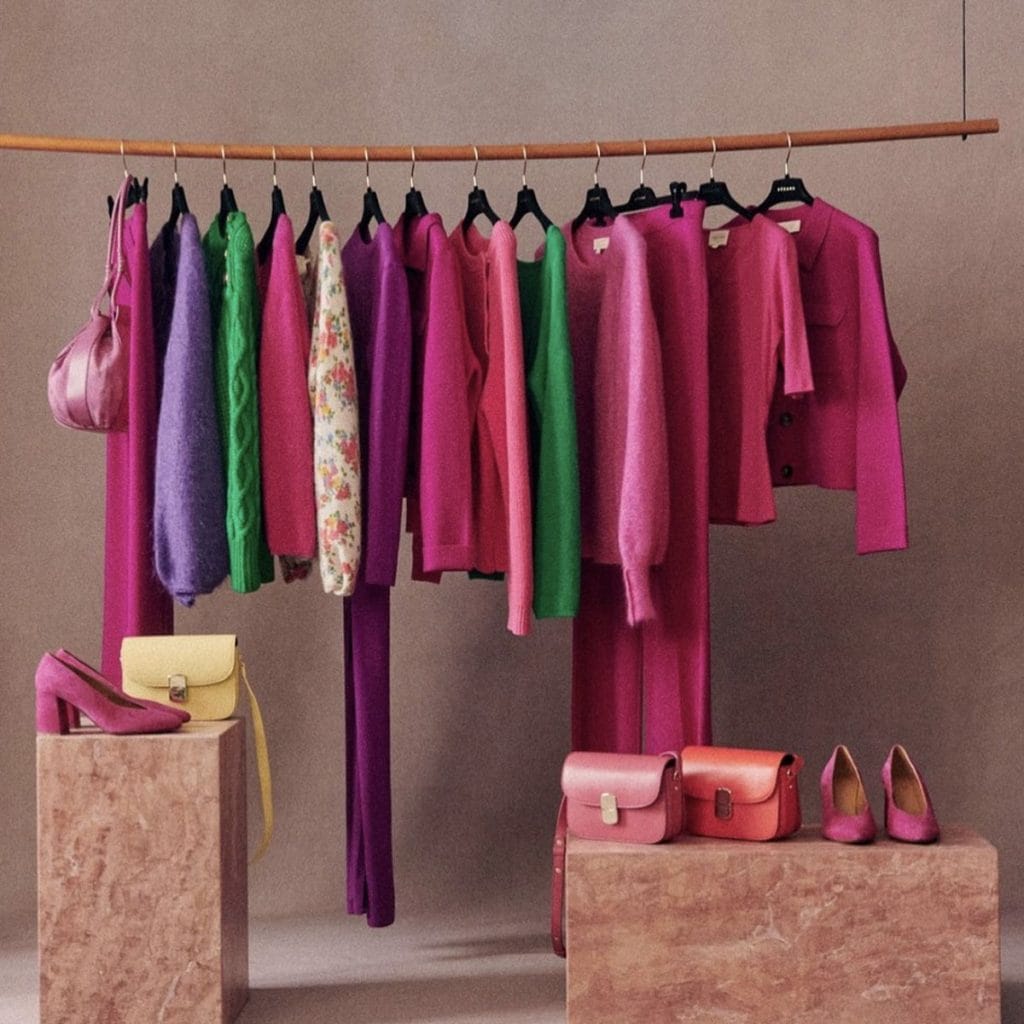
Marylebone wakes each morning to the soft rumble of bakeries pulling fresh loaves from ancient ovens and the muted chatter of residents who know every brick on their block. Here, terracotta chimneys and Georgian façades lean in like old neighbours swapping stories, and the rush of Oxford Street feels a galaxy away. At the centre of this village-within-a-city, Chiltern Street stands apart. Its hand-picked stores offer goods that speak softly yet carry weight, celebrating craft rather than clamour. Slip through the doors at numbers 13-15 and you enter Sunspel Marylebone, a sanctuary of quiet luxury London style where fabric, fit and heritage combine with almost monastic calm. Touch a T-shirt, feel the feather-light knit, and you understand why generations of discerning shoppers return.
A Street Set Apart
Chiltern Street did not become a retail destination by chasing headlines. Its allure lies in a refusal to shout. Independent tailors, cult cafés and niche perfumiers share a single conviction: things worth owning are things worth making well. Sunspel Marylebone embodies this credo. Rather than planting a glossy flagship on a hectic thoroughfare, the brand chose a street that mirrors its own measured confidence. Shoppers stepping off nearby Paddington Street Gardens feel the tempo drop; the store’s timber floors, diffused lighting and unfussy rails create a mood closer to a reading room than a boutique. It is a setting that rewards slow wandering and rewards it handsomely.
Roots in Industrial Nottingham
The journey to Marylebone began 130 miles north and 165 years ago. In 1860, Thomas Arthur Hill, the eleventh child of a Nottingham hosiery maker, broke from his post at I & R Morley to open a factory dedicated to one radical goal: crafting everyday garments from superlative cloth. At a moment when steam engines clattered through newly built mills, Hill installed advanced machinery, improved sanitation and introduced paid breaks, drawing praise from reformers stunned by his modern methods. Early tunics and undershirts leaving Newdigate were lighter, softer and stronger than rivals, setting a benchmark for luxury underwear long before the phrase existed.
Crisis, Retrenchment and Renewal
No company survives a century without weathering storms. For Sunspel, the first tempest arrived with the 1929 crash that froze international trade. Export lines collapsed; hardship forced production to relocate to a modest lace mill in Long Eaton in 1937. There, the firm doubled down on its most precious asset – Sea Island cotton underwear – rather than dilute its standards.
War soon followed. Under the CC41 utility scheme, the Long Eaton team supplied breathable undergarments to troops, inventing the Q14 cellular mesh to keep soldiers cool in sweltering theatres. The factory even survived the Blitz, though London offices did not. Pragmatism kept the brand alive, yet principles remained intact.
By the 1990s, changing tastes and limited investment left revenues sagging again. Enter Nicholas Brooke and Dominic Hazlehurst, entrepreneurs who saw potential in heritage, not hype. Acquiring the firm in 2005, they shifted focus from thermal vests for retirees to impeccably cut tees and polos for design-literate thirty-somethings. The recipe was simple: honour the archive, refine the fit, and tell the story.
Long Eaton The Beating Heart
The red-brick factory acquired in 1937 is more than a workplace; it is a living memory bank. Patterns archived since the Victorian era line shelves beside spinning machines, and many machinists are children or grandchildren of former employees. Designers, technicians and stitchers sit within the same courtyard, a physical dialogue that ensures ideas translate swiftly into prototypes on the floor next door. Crucially, the factory remains the only site in Britain turning out luxury T-shirts at scale, giving Sunspel direct control over every seam, hem and bind.
From Boxers to Bond
Quality alone does not guarantee fame; culture does that. Two pop-culture lightning bolts carried Sunspel from specialist circles to global consciousness. In 1985, Levi’s aired its “Launderette” advert: Nick Kamen sauntered into a launderette, peeled off his jeans and lounged in snowy Sunspel boxers, sparking nationwide demand for looser underwear. Twenty-one years later, costume designer Lindy Hemming dressed Daniel Craig in a tailored Sunspel polo for Casino Royale. The Riviera Polo blended soldierly ruggedness with Riviera ease, sealing Craig’s status as the modern Bond and propelling the garment to icon status. Neither moment relied on bold logos; both trusted the subtle power of flawless fabric and fit.
Fun Fact: Chiltern Street earned its distinctive curve when the Portman Estate’s 19th-century planners diverted the road to save an ancient elm believed to shelter nightingales.
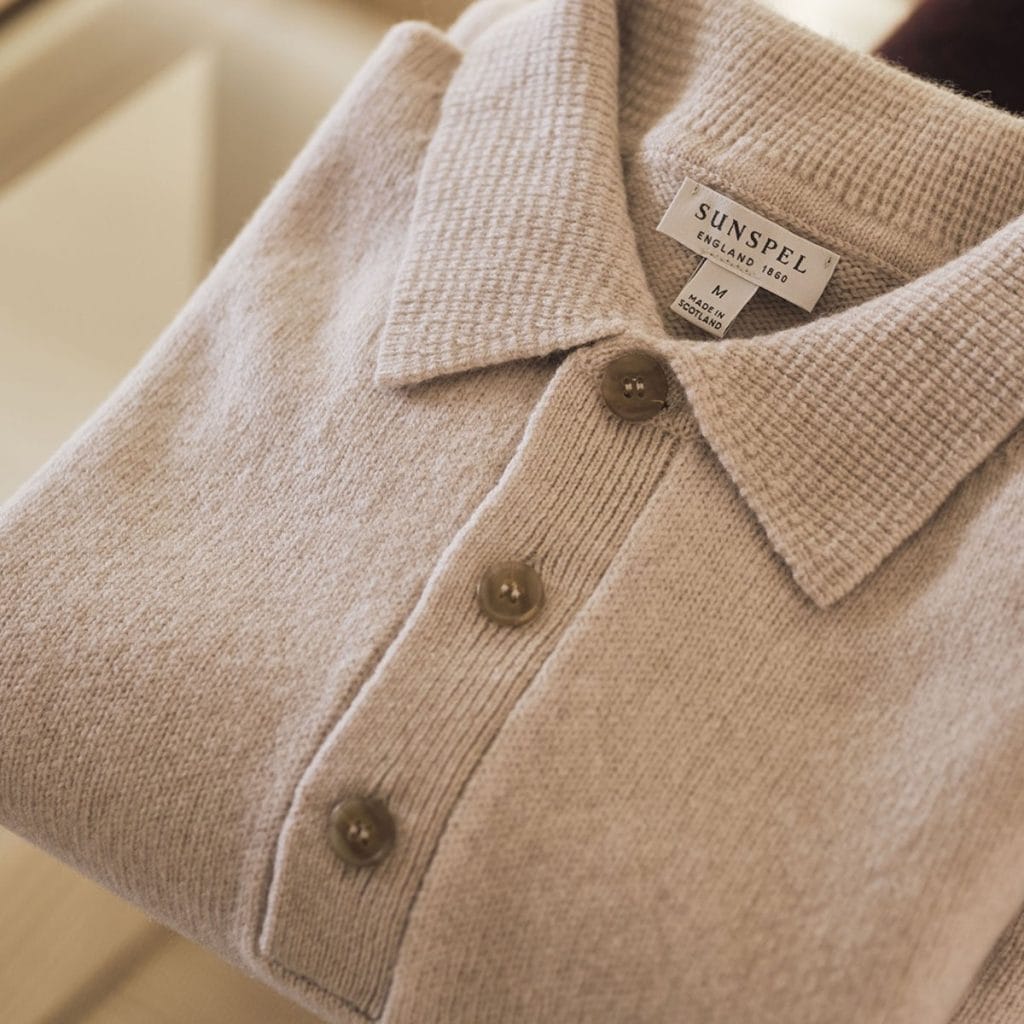
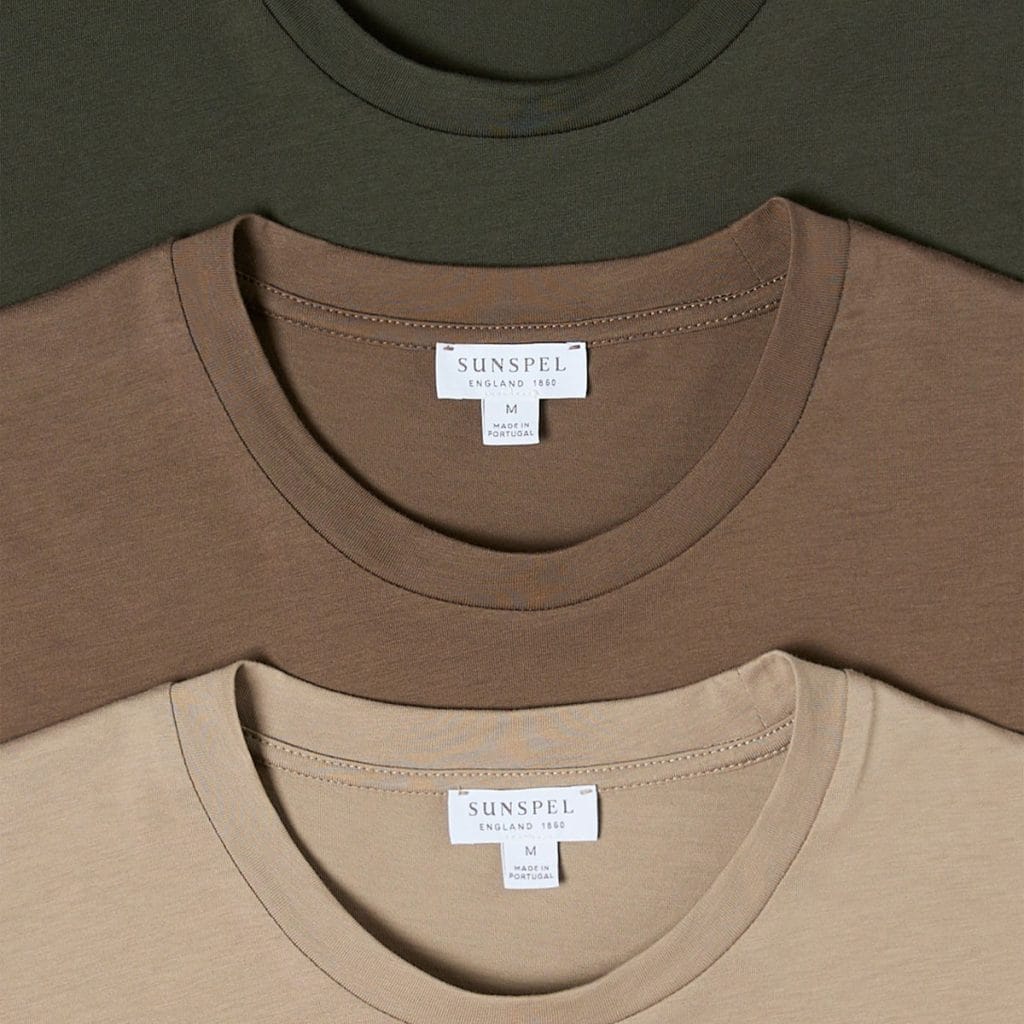
The Fabric of Excellence
Ask any craftsperson at Long Eaton what sets their work apart, and they start with the material. Sunspel speaks a language of fibres, not slogans. Garments begin life as raw lint sourced from farms and flocks chosen for quality above yield, then alchemised into proprietary cloths carrying Q numbers understood in-house like family names. Touch remains the ultimate test.
A Trio of Peerless Fibres
- Sea Island Cotton
- Extra-long staple fibres harvested by hand in the Caribbean deliver a silk-like lustre and remarkable strength despite gossamer weight. Annual global output: roughly 150 bales. Sunspel turns this rarity into T-shirts and boxers that feel almost liquid against the skin.
- Supima Q82 Jersey
- Grown on a single Californian farm under strict environmental rules, this cotton is spun into two-fold yarn before knitting. The process produces a lightweight fabric so fine that only veteran machinists can sew it without buckling. The Classic T-shirt owes its drape and resilience to this cloth.
- Extra-Fine Merino Wool
- At 19 microns, the fibres rival cashmere for softness yet outperform it on durability. Milled in Piedmont and knitted in Portugal on refurbished Bentley machines originally built in Loughborough, the wool lineage mirrors Sunspel’s own Anglo-European craftsmanship.
Crafting Icons That Last
Precision matters when designs stay deliberately minimal. The Classic T-shirt passes through 12 stages and 15 inspections. Every neck-bind must lie flat; every side seam must match the grain of the cloth. Failure at any point sends the garment back for correction or, in rare cases, recycling. The British Boxer’s unique rear panel removes the central seam that can irritate; flat-locked stitching keeps edges smooth. Such micro-adjustments are invisible on a hanger yet tangible to the wearer five years later.
Bold keywords sparkle through the collection: Riviera Polo Shirt, Long Eaton factory, Sea Island cotton, best menswear in Marylebone. Each phrase mirrors what shoppers type into search bars when hunting for quality close to home.
A Store Shaped by Substance
Step through the pale timber door of Sunspel Marylebone, and the outside bustle fades. Natural oak flooring runs the length of the narrow shop, punctuated by steel rails carrying carefully spaced garments. Lighting is warm but subdued, encouraging fingers to trail across loopback sweats and Supima tees. Staff greet visitors not with sales patter but with knowledge: which mesh breathes best on a July commute, how to launder Sea Island cotton in hard London water, why the Q numbers matter.
Downstairs, a flexible space morphs from a design studio by day to an exhibition venue by night, hosting photography shows, record-listening sessions and panel talks. These events draw a community of artists, stylists and editors who value understated quality over seasonal hype, further entwining the store with Marylebone’s creative pulse.
Neighbourhood Symbiosis
Chiltern Street operates like a finely balanced ecosystem. Trunk Clothiers curates Japanese workwear, John Simons preserves Ivy League authenticity, and Casely Hayford fuses Savile Row structure with street-wear subversion. Wander a few steps and you reach Monocle Café for an espresso or Cire Trudon for a beeswax candle scented with Versailles legend. Sunspel does not compete; it complements. The presence of these neighbours ensures a footfall predisposed to craftsmanship. At the same time, Sunspel’s global reputation draws fresh visitors who, in turn, discover the street’s hidden depths. The result is a virtuous loop of awareness and loyalty.
Sustainability Without Sermons
In an age of disposable trends, Sunspel’s most radical act is encouraging customers to buy less. Longevity underpins its four-pillar strategy: natural fibres, traceable sourcing, ethical labour and durable construction. Independent auditor GoodOnYou rates the brand as “It’s a start” – commendation for local manufacturing tempered by questions over living wages across remote supply nodes. Transparency reports are expanding; recycled hangers and plastic-free buttons are rolling out. Yet the strongest argument remains the garment itself: a Supima tee worn for a decade uses fewer resources than five fast-fashion replacements.
Closing Reflection
Sunspel’s Chiltern Street home proves that luxury need not shout. It whispers through texture, proportion and provenance, inviting those who appreciate patience and precision. Like the plane trees lining Marylebone High Street, the brand grows slowly but endures, offering shade from the glare of passing fads. In London parlance, “the proof of the pudding is in the eating”. Slip on a Riviera Polo and you taste the quiet confidence of craft perfected over time.