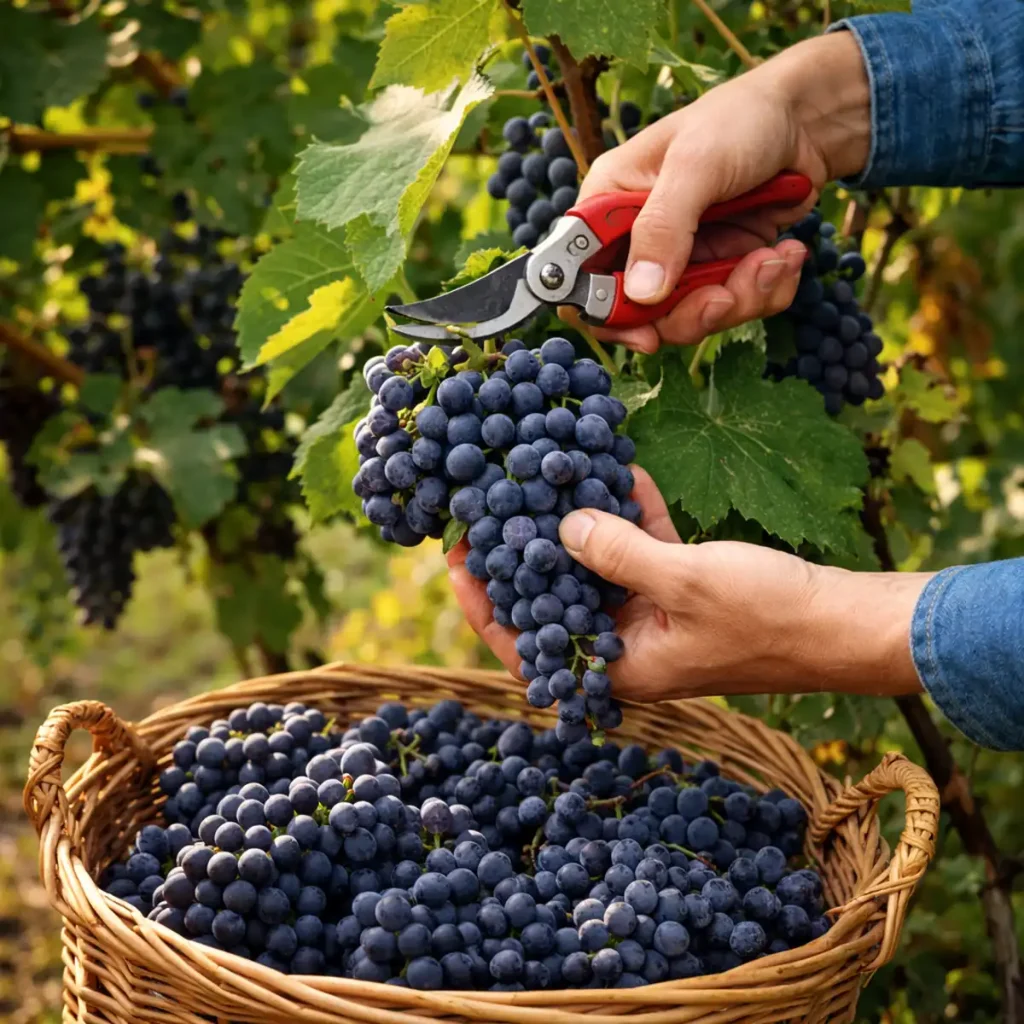
A drink made from fermented grapes should be compatible with a vegan diet. In practice, many wines undergo steps that introduce animal products during production. The complication arises from how wine is clarified and stabilised, as well as from a regulatory gap that treats certain substances as processing aids rather than ingredients. These aids do not have to appear on the label. For shoppers who care about purity and ethics, the result is avoidable uncertainty at the shelf.
This feature examines where animal inputs enter the process, how they are used, and why they are seldom disclosed. It sets out practical ways to identify vegan wine with confidence and explains why producers aligned with minimal intervention, organic, and biodynamic practices often offer the most straightforward path to animal-free bottles. The conclusion is plain. Certification and transparent cellar practice are the only reliable safeguards against hidden animal products, and they correlate with better provenance, cleaner flavours, and stronger consumer trust.
Why Animal Products Appear In Wine?
Clarity and stability affect how a wine looks, ages, and travels. Young wines carry suspended solids from fermentation, including proteins, phenolics and yeast fragments. Left alone, gravity and time will clear much of this matter. Many cellars still prefer to accelerate the process. The most common route is fining. A fining agent is stirred through a tank or barrel. It binds with target particles, forms clumps, and then settles. The clear wine is racked off the sediment.
Historically, effective and relatively cheap fining agents came from animal sources. They were never intended to remain in the finished wine, so regulations classed them as aids to processing. That classification created the present labelling problem. An additive can be used and removed, leaving only traces, and it still needs no explicit disclosure. Consumers who expect the label to tell the whole story are left to infer purity from silence, an unreliable practice.
The Main Non-Vegan Fining Agents And What They Do
The four classic animal-derived agents work because their proteins attract oppositely charged particles in wine. Each has a different affinity and is matched to a task. None is compatible with a vegan lifestyle.
| Fining agent | Animal source | Primary purpose |
| Isinglass | Dried fish bladders containing collagen | Polishes white and sparkling wines by removing fine haze and soft phenolics. |
| Casein | Milk protein | Brightens white wines and reduces oxidation-induced browning. |
| Egg albumen | Egg whites | Softens coarse tannins in structured reds during élevage. |
| Gelatin | Animal collagen from bones or hides | Broad clarification and astringency reduction in both reds and whites. |
While racking removes the bulk of these agents, trace residues may remain. For vegans, the issue is not residue levels but the decision to introduce animal material into the process. The moment such an agent is used, the wine no longer meets a vegan standard.
Secondary Sources Of Animal Inputs In Cellar And Packaging
Fining is the main route. It is not the only route. A close look across the production chain reveals other, less obvious points at which animal products have historically appeared—or may still appear—in niche contexts.
In the vineyard. The risk to the finished wine is low. Fertilisers such as manure are soil inputs rather than ingredients. Specific biodynamic preparations use animal sheaths as composting vessels. These do not enter the wine and are outside the scope of vegan certification for finished beverages, though some consumers will want to understand the practice.
In the cellar. Old wooden cooperage sometimes relied on animal glues or rendered fats to seal leaks. A minority of legacy depth-filter materials once contained gelatin. Contemporary quality cellars specify inert sealants and modern media. Many now deploy crossflow filtration to achieve clarity and microbial stability without animal matter. The risk is much reduced, but it is not zero for older facilities unless the producer confirms current practice.
In packaging. Adhesives used for labels and capsules can be casein-based or otherwise derived from animal sources. Certified producers verify the entire supply chain—from label glue to capsule adhesive—and confirm that no animal products are used.
Why Labels Rarely Reveal Processing Aids
The core problem is definitional. Under EU and UK law, a processing aid is used to make, process, or prepare a food, and is removed before the final product, or remains but no longer performs a technological function. Such aids do not require declaration on the label. The bottle still must list allergens and the standard ‘Contains sulphites’ notice, where applicable, yet the presence of a fining aid, such as isinglass, is not necessarily disclosed.
The outcome is an informational imbalance. Two bottles can look identical. One may be an unfined, naturally clear wine. The other may have been fined with an animal-derived aid. Unless the producer voluntarily declares that the process or the wine carries vegan certification, a conscientious buyer cannot tell the difference by reading the back label alone.
How Vegan Certification Closes The Gap
Third-party certification replaces assumption with verification. Reputable marks audit both the cellar and the ancillary materials.
The Vegan Society Trademark and the V Label. These programmes require documentary proof that no animal products are used at any stage of production. Audits examine fining records, filter media specifications, and packaging inputs such as adhesives and capsule materials. The scope reaches beyond the tank to the bottling line and the label printer.
BeVeg and other credible schemes. Similar standards exist under different marks. The principle is consistent. The certifier tests claims and inspects the supply chain. For a producer, the mark signals operational discipline and a willingness to subject their process to an external check. For a consumer, it is a practical, scannable shorthand for vegan wine purity.
Certification does not comment on vineyard practice. It answers a narrower question. Was any animal product used to make, stabilise, or package this wine? To judge agricultural inputs and broader sustainability, consumers should look for the EU organic leaf, Demeter or Biodyvin for biodynamics, and detailed producer notes.
Minimal Intervention As A Practical Safeguard
Many producers avoid animal fining by adopting methods that allow the wine to clear itself or by using neutral fining agents. These choices align with the broader values of natural wine and low-input cellars.
Time and gravity. After fermentation, suspended solids settle. Racking moves clear wine off the lees into a clean vessel. Repeated racking delivers brightness without any additive. Cold cellars accelerate tartrate precipitation and sedimentation. The trade-off is time. The benefit is purity.
Bentonite clay and plant proteins. When stability is required, bentonite clay provides a vegan solution to protein haze in whites. Its negatively charged plates bind positively charged proteins, forming a heavy floc that settles to the bottom. Plant-derived proteins from pea or potato can target specific phenolics without resorting to animal inputs.
Crossflow filtration and sterile bottling. Tangential flow across a membrane allows precise removal of yeast and bacteria at relatively low pressure in a closed circuit. The technique preserves colour, aroma precursors, and valuable colloids that contribute to mouthfeel. A final membrane pass near 0.45 microns before bottling can secure microbial stability for wines with little or no added SO₂. When calibrated and monitored, the process supports minimal intervention rather than contradicting it.
Together, these tools make it straightforward to bottle 100% vegan wine without sacrificing flavour or longevity.
Fun fact: The oldest “vegan by default” wines were likely made in medieval monastic cellars where time, gravity, and repeated racking achieved clarity long before modern fining was common.
How To Read A Back Label With Confidence
The most effective strategy is layered. Use certification first, then corroborate with producer detail and style cues.
Look for explicit vegan marks. The Vegan Society symbol, or V Label, removes ambiguity. Some producers add a plain language statement such as “unfined and unfiltered” or “no animal products used” on the back label or technical sheet.
Cross-check with farming standards. Organic wine and biodynamic wine marks do not guarantee vegan status, but they signal a low-input mindset and a producer likely to document methods. When those marks appear alongside a vegan logo, the bottle offers strong assurance on both agriculture and cellar practice.
Read the technical sheet. Many serious producers publish a vintage-specific fiche on their website. Search for terms such as fining agents, bentonite, crossflow filtration, unfined, unfiltered, and total SO₂. A concise, transparent method statement is a good proxy for overall integrity.
Check for bottling claims. Notes on sterile filtration, bottling date, and closure type reflect process control. A producer willing to specify these details is less likely to leave ambiguity around fining.


Common Myths That Confuse Vegan Buyers
“Vegan means unfiltered.” Not necessarily. Vegan certification prohibits animal inputs. It does not forbid filtration. A wine can be vegan and filtered using inert media or crossflow membranes.
“All organic wine is vegan.” Incorrect. Organic governs agriculture and sets certain cellar limits, including lower maximum SO₂. It does not rule out egg white, isinglass, or casein fining unless the bottle also carries a vegan mark.
“Vegan fining removes flavour.” Over-fining with any agent can strip texture. Sensible use of bentonite for protein stability in whites targets haze-forming proteins with minimal impact on aroma or palate. Producers committed to purity will either avoid fining altogether or use the lightest effective touch, backed by lab trials and tasting.
“Natural wine is always vegan.” Often, and increasingly, but not always. Natural producers generally avoid animal farming. It is still prudent to check, particularly with older vintages or legacy labels.
Producer Signals That Support Trust
Beyond formal certification, confident operational decisions indicate a mindset aligned with animal-free production and transparent methods.
Detailed lot control. Precise batch numbers, bottling dates, and closure codes help trace a bottle to a specific run. Serious producers keep cellar logs that record every fining or filtration event. That discipline is the backbone of an audit trail for wine certification.
Laboratory analysis disclosed. Publishing data on pH, total acidity, alcohol, residual sugar, and total SO₂ demonstrates a technical culture. These numbers do not determine vegan status. They do suggest a producer who measures and verifies rather than improvises.
Packaging transparency. Stating that label adhesives and capsules are free of animal products addresses a subtle but genuine concern. Some producers add a short note on the label or the website to confirm.
Third-party importers and retailers. Specialist merchants who curate ranges of vegan wine and natural wine add another layer of verification. Reputable shops document fining choices and filtration methods for each cuvée and will confirm details on request.
Practical Buying Guide For Vegan Consumers
On the shelf. Scan for a vegan logo first. If none is present, look for “unfined and unfiltered” and for cues like organic wine or biodynamic wine marks. If the bottle is from a producer known for minimal intervention, the odds improve, but the absence of a vegan mark still leaves a gap.
Online. Use retailer filters for vegan and organic, then click through to the product page. Read the technical section. Favour listings that specify fining and filtration. Where the detail is thin, ask the merchant to confirm.
In restaurants and bars. Ask the simple question: Which wines are certified vegan? If the venue lists producers by name, staff can often check a fiche on a phone. If your server seems unsure, pick producers with a track record in low-input winemaking and ask for unfined, unfiltered bottles.
At home. Keep notes. When you find a producer that documents methods and delivers the style you enjoy, follow their range across vintages. Consistency in disclosure is a strong positive signal.
Why Choosing Vegan Often Improves Wine Quality?
The benefits of vegan wine are ethical. They can also be sensory. Wines that avoid aggressive fining retain more colloids and polysaccharides that contribute to mouthfeel. Reds left to clarify by time and careful racking preserve a finer tannin texture than reds polished with heavy animal proteins. Whites stabilised with bentonite clay or clarified by gravity show bright, unmasked aromatics. Where producers rely on crossflow filtration and scrupulous hygiene rather than high doses of SO₂, the fruit expresses itself cleanly with less sulphur shadow on the nose.
This does not mean every vegan bottle outperforms every non-vegan bottle. The methods associated with vegan certification often align with thoughtful, precise winemaking that respects the original material.
Frequently Asked Questions For Clarity
Is a wine vegan if the vineyard uses manure? Yes, for most definitions of vegan wine. Manure is a soil input. Vegan certification focuses on whether animal products are used to make, clarify, stabilise, or package the finished beverage.
Does micro-oxygenation affect vegan status? No. It is a cellar technique that manages oxygen exposure. Vegan status concerns animal inputs, not gas management.
Do screwcaps or corks change anything? The closure does not usually affect vegan status, though an adhesive under a capsule could. Certified producers vet these materials.
Why not list fining agents on every label? Current law treats them as processing aids. Some producers voluntarily disclose, but most rely on technical sheets and third-party marks.
Actionable Steps To Avoid Hidden Animal Products
- Prioritise bottles with a recognised vegan mark.
- Use retailer filters for vegan wine and read the technical note.
- Prefer “unfined and unfiltered” where the style suits your palate.
- When fining is used, look for bentonite clay or plant proteins.
- Favour producers who publish cellar methods and lab data.
- Combine vegan certification with organic or biodynamic wine marks to align cellar ethics with sustainability in the vineyard.
Conclusion: Choosing Purity And Honesty From Grape To Glass
Hidden animal products enter wine through a small set of practices, mostly fining. They persist, in part, because regulations do not require disclosure of processing aids. Consumers who rely on labels alone face a blind spot. There is a straightforward remedy. Select bottles with credible vegan certification and back that choice with producers whose methods echo minimal intervention. Where clarity is required, modern tools like crossflow filtration achieve stability without animal inputs or flavour stripping.
In a sector that values provenance, the decision to buy certified vegan wine is a direct vote for process integrity. It exchanges uncertainty for documented practice, and it often aligns with qualities that matter in the glass. The best solution to the problem behind the barrel is simple. Make the stamp on the label do the hard work, then enjoy the wine with confidence.