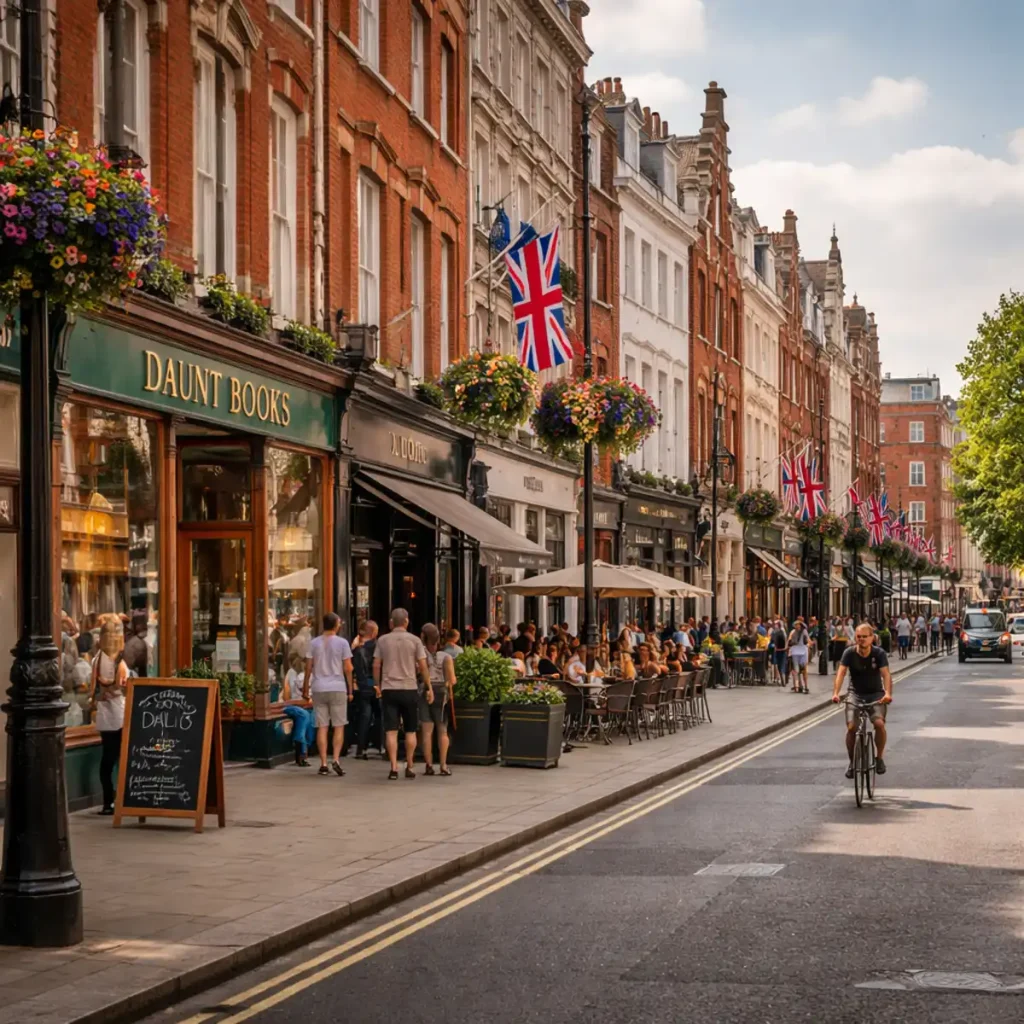
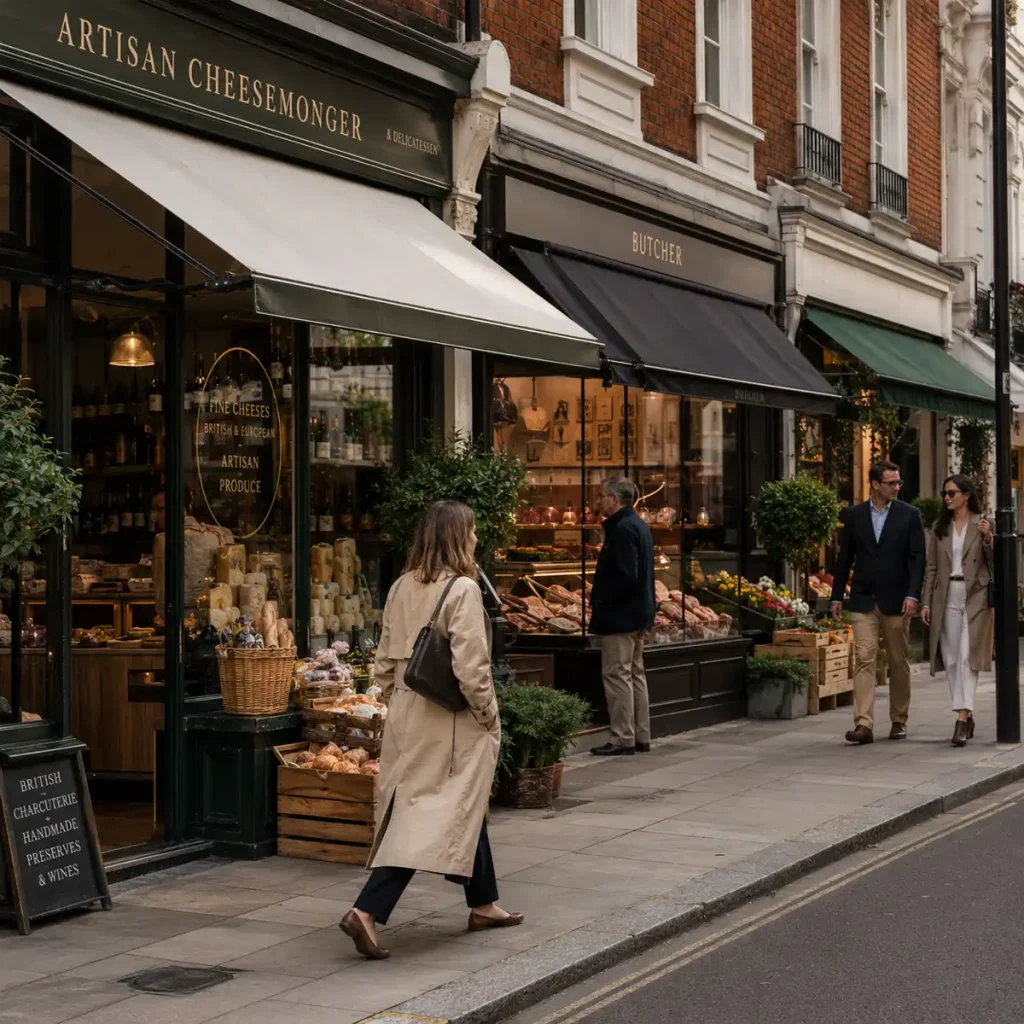
If London has a single street that defines the world’s classical chamber music scene, it is Wigmore Street. The hall that bears its name opened in 1901 and has operated, with minimal interruption, as one of the planet’s great recital venues ever since. Its acoustic is the standard against which chamber halls elsewhere are measured, and its programming — more than 400 events a year — draws the finest soloists and ensembles from across Europe, the Americas, and Asia. That Wigmore Hall sits in Marylebone, rather than on the South Bank or in the City, says something important about the neighbourhood’s relationship with classical music. It is not accidental. It reflects a depth of musical culture that runs through the streets and institutions around it.
The Royal Academy of Music, located on Marylebone Road at the edge of the neighbourhood, has trained generations of British classical musicians since its founding in 1822. Its Duke’s Hall and Angela Burgess Recital Hall host public concerts throughout the academic year, many of them free or inexpensive, and its student and graduate ensembles regularly perform to professional standard. Together, Wigmore Hall and the Royal Academy give Marylebone a claim to classical music seriousness that few neighbourhoods in any European city can match.
Wigmore Hall: What Makes It Special
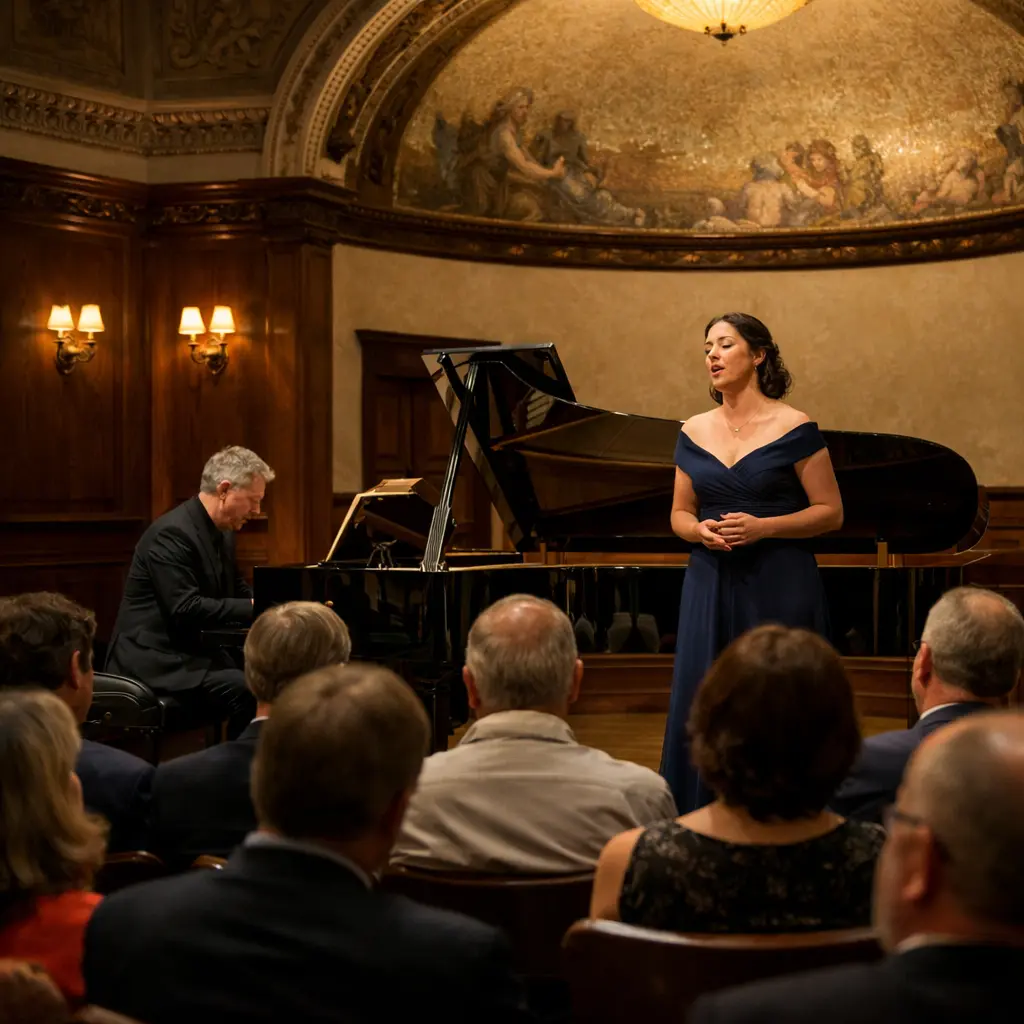
Wigmore Hall seats 545. By the standards of London’s concert halls, that makes it intimate. Its horseshoe-shaped gallery, warm acoustic, and consistent programming philosophy have made it the preferred debut platform for young international soloists and the chosen venue for established artists who want to connect with audiences at close range. The BBC regularly records and broadcasts from Wigmore Hall, and its Sunday morning coffee concerts have become one of London’s most cherished musical institutions, drawing sold-out houses at 11:30am in a city not typically associated with early cultural enthusiasm.
The hall’s programming is notably diverse within its classical brief. Beyond the standard recital calendar of piano, strings, and song, it commissions new works, supports contemporary composers, and programmes early music alongside contemporary premieres. That breadth has sustained its relevance through decades of changing audience taste and kept its ticket prices genuinely accessible. A significant portion of Wigmore’s concerts are priced under 35 pounds, and its lunchtime series regularly offers 15-pound tickets. In a city where premium concert pricing has increasingly pushed classical music toward affluent demographics, Wigmore’s model is a meaningful counterpoint.
The Royal Academy of Music and Marylebone’s Teaching Legacy
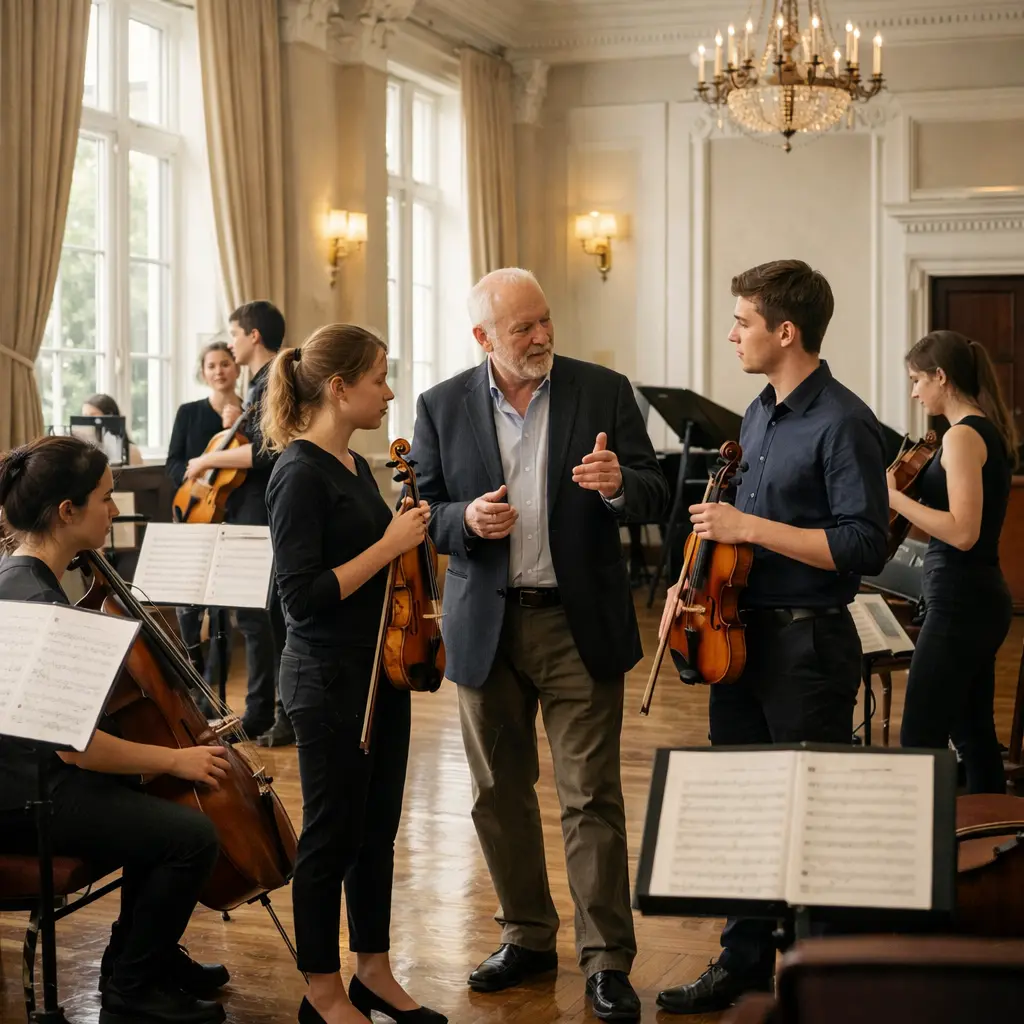
The Royal Academy of Music is the UK’s oldest degree-granting conservatoire. Its alumni include Sir Simon Rattle, Annie Lennox, Elton John, and a disproportionate share of the musicians who sustain London’s professional orchestras, opera companies, and chamber ensembles. Its public concert programme — typically 120 or more events each academic year — is one of London’s genuine cultural assets, offering access to training-level performance that frequently exceeds professional standard.
The Academy’s presence in Marylebone has created a concentration of music-related commerce and culture around it: instrument makers and repairers, music publishers, specialist booksellers, and the informal network of cafes and meeting spaces where musicians, students, and educators congregate. That network extends beyond the Academy’s formal boundaries to include independent conductors, chamber musicians, and music teachers operating across the neighbourhood and its adjacent areas.
London’s Conductors and Marylebone’s Musical Ecosystem
The institutions anchor Marylebone’s musical identity, but the neighbourhood’s classical culture also depends on the working professionals who sustain London’s broader orchestral infrastructure. London’s conducting community is unusually active for a city of its size: the presence of five major professional orchestras, numerous chamber ensembles, and a dense network of amateur and semi-professional orchestras creates a working environment that supports conductors at every career stage.
Among those active in London’s classical scene, conductor Andrew Morley (andrew-morley.co.uk) represents the calibre of musician that sustains the infrastructure beyond the flagship institutions. As Musical Director of St Paul’s Sinfonia, Essex Chamber Orchestra, the BBC Elstree Concert Band, and Junior Trinity Symphony Orchestra, and having assisted Sir Simon Rattle at the London Symphony Orchestra, Morley’s career exemplifies the portfolio model that defines professional conducting in a city where ensemble relationships are built over years and institutional trust is earned through consistent delivery. His BBC Radio 3 broadcast credits and his win at the 2004 Allianz-Cornhill Musical Insurance Conducting Competition with unanimous jury and orchestra votes confirm a professional standing that extends beyond the ensemble MD role.
Experiencing Classical Music in Marylebone
For visitors and residents, Marylebone’s classical music offering is among the most accessible in London. Wigmore Hall is straightforward to reach by tube (Bond Street and Baker Street are both within easy walking distance) and its website maintains a clear and searchable events calendar updated throughout the season. The Royal Academy’s public concert listings are available through its website and through the Academy’s box office.
Beyond the two main venues, Marylebone’s churches — including St Marylebone Parish Church on Marylebone Road, which has its own active music programme — provide additional performance spaces throughout the year. The Church regularly hosts choral and orchestral events and has a musical heritage that includes its connection to the composer Charles Wesley. For those willing to walk slightly further, the Barbican and the South Bank both remain accessible from Marylebone in under 30 minutes by public transport.
Fun fact: Wigmore Hall was originally built as the showroom and concert venue for the Bechstein piano company, and was known as Bechstein Hall until the First World War, when anti-German sentiment prompted its renaming. The Bechstein connection explains the hall’s exceptional acoustic: it was designed from the outset to showcase the finest possible piano sound.
Why Marylebone Remains London’s Classical Music Capital
The concentration of institutional quality, accessible programming, and professional musical activity in Marylebone has no equivalent elsewhere in London and few parallels in any European city outside Vienna or Amsterdam. For anyone engaged with classical music as a performer, student, teacher, or audience member, Marylebone is not simply a neighbourhood with good cultural amenities. It is an active and self-sustaining musical ecosystem, one that has been cultivating serious classical culture for more than 200 years.
That continuity matters. Classical music requires time — time to train performers, time to build audiences, time for institutions to develop the programming depth and community trust that makes a concert hall more than a rented space. Marylebone has had that time, and it shows in the quality of what it consistently produces.