By a second or third visit, Marylebone's famous addresses are familiar. You have browsed Daunt Books, stood in front of the Wallace Collection's Old Masters and walked the length of the High Street, and the obvious pleasures are no longer a surprise. Marylebone beyond the high street is where the neighbourhood becomes genuinely rewarding, in the winding lane that breaks the Georgian grid, the weekend markets the locals actually use, and the quiet gardens and hidden mews that the first-time visitor never reaches.
This guide is written for the repeat visitor who wants the layer beneath the headline attractions. It traces the buried river that explains the shape of the streets, the Saturday and Sunday markets that change the village's rhythm, the green squares most people walk straight past, and the corners where Marylebone's history is still legible in the buildings. The aim is not to replace the High Street but to give a reason to come back, and a route through the parts of the neighbourhood that reward knowing it well rather than seeing it once.
What to See in Marylebone Beyond the High Street
Marylebone beyond the high street rewards the repeat visitor with four kinds of discovery. There is Marylebone Lane, the medieval curve that traces a buried river, the weekend markets that bring the village to life on Saturdays and Sundays, the green squares and gardens hidden among the terraces, and the mews and the parish church where the neighbourhood's history survives.
None of these is exactly secret, but all are easily missed. A first visit naturally gravitates to the shops, the bookshop and the Wallace Collection, and a single day rarely leaves time for the turnings off the main streets. The repeat visitor, freed from the obligation to see the obvious, can follow the lane, time a market and wander the squares at the pace the village was built for.
The galleries and the High Street remain worth returning to, of course, and the best second day weaves them together with the quieter discoveries rather than choosing between them. What follows is the layer most visitors leave unexplored, arranged so it can be stitched into a walk.
the art galleries worth your time in Marylebone
Marylebone Lane and the Buried River Tyburn
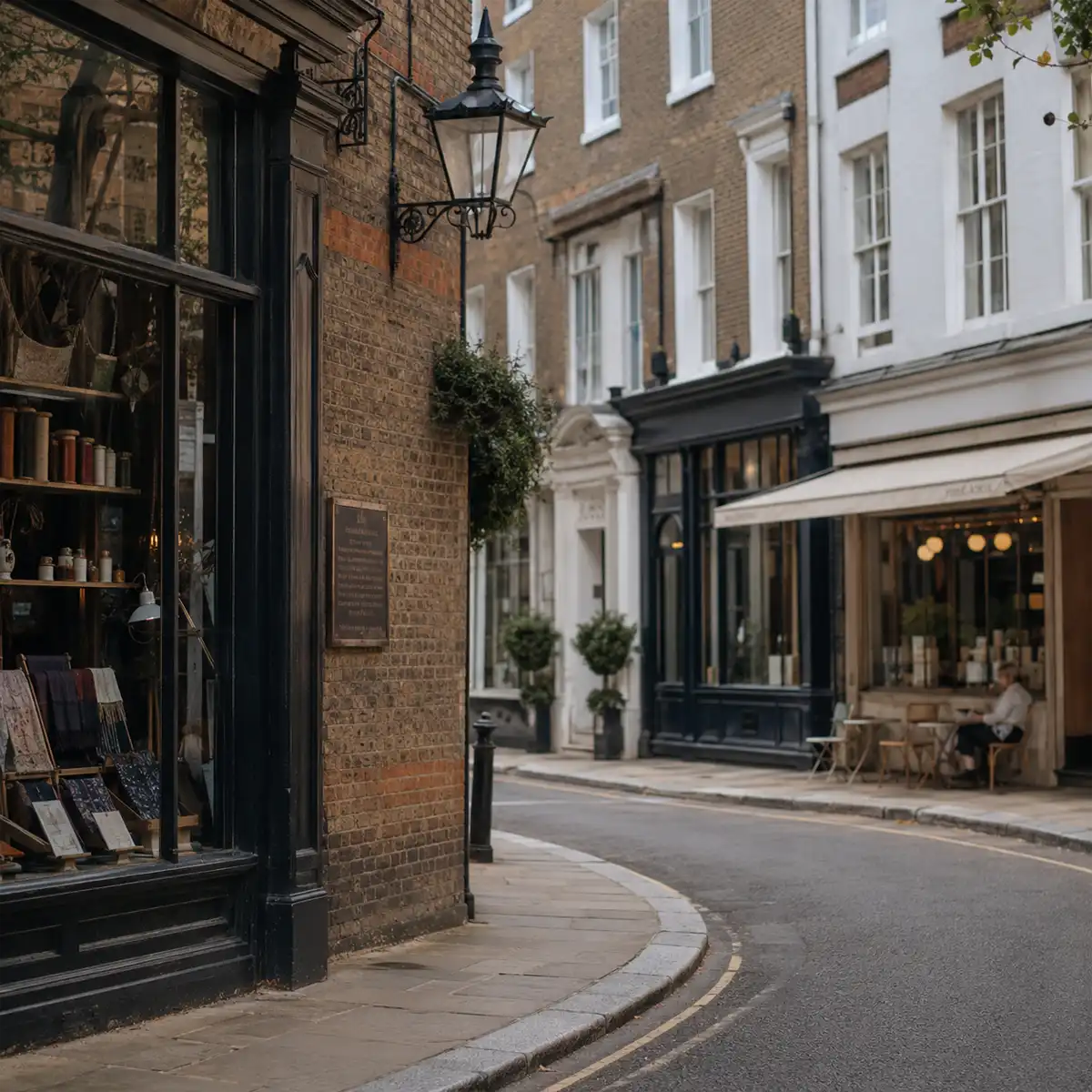
Marylebone Lane is the key to understanding the neighbourhood. While most of Marylebone sits on a neat Georgian grid, the lane curves stubbornly up from Oxford Street because it follows the course of the River Tyburn, the village stream now buried beneath the pavement. Walking its bend is walking the line of a lost river.
The history is written into the name. The village grew up around the church of St Mary by the Tyburn, which over centuries was softened into Saint Mary-le-bourne and finally Marylebone, so the neighbourhood is quite literally named for the stream the lane traces. A small conduit plaque on Marylebone Lane marks the buried watercourse, which once supplied fresh water to the City of London, for anyone who looks for it.
The lane is also where old Marylebone survives. Paul Rothe and Son, a cafe and delicatessen run by the same family for four generations, keeps the air of the pre-gentrification village grocer, while VV Rouleaux sells ribbons, trimmings and hats of a kind the chains long ago stopped stocking. They are the shops that remind you the village existed long before it became fashionable. The lane even keeps its own quiet society, the Tyburn Angling Society, a tongue-in-cheek club devoted to the buried river, which has long met at the Golden Eagle pub on Marylebone Lane, a reminder that the stream is still part of the village's sense of itself.
Fun fact: The curve of Marylebone Lane is no accident, it follows the buried River Tyburn, and the name Marylebone itself comes from Saint Mary on the Tyburn, the church beside the stream.
The Weekend Markets Locals Actually Use
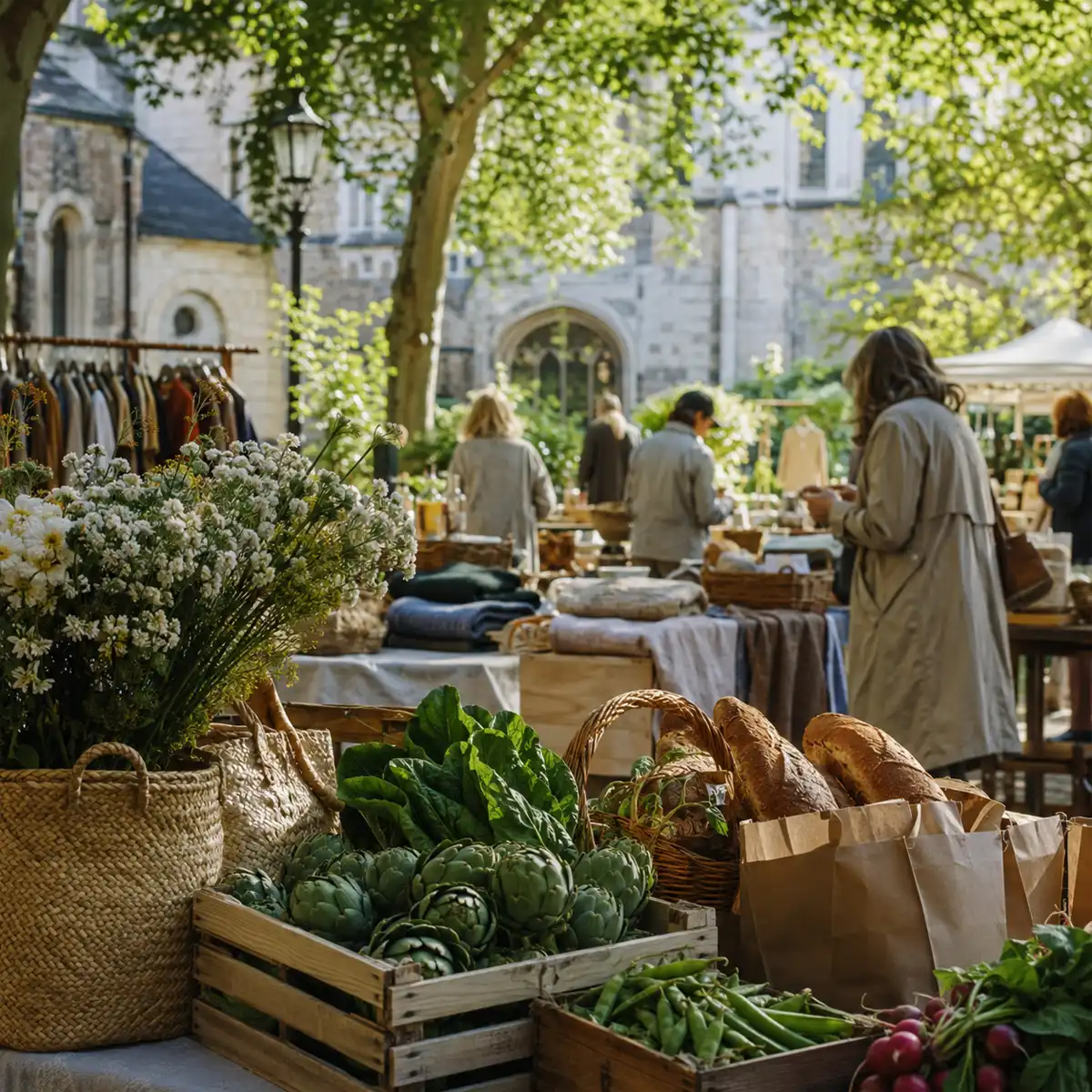
Marylebone's weekend markets are the surest way to see the village as locals do. On Saturdays, the Cabbages and Frocks market fills the cobbled grounds of St Marylebone Parish Church from 11am to 5pm with artisan food and vintage and new fashion, and on Sundays the Marylebone Farmers' Market, one of the best in London, takes over the car park off Moxon Street.
Each has its own character. Cabbages and Frocks is the small, charming kind of market you might expect to stumble on in Paris rather than London, a few dozen individual stalls under mature trees, with occasional themed days, and it makes an easy, unhurried browse before lunch on the High Street. The Farmers' Market is the serious food one, with 30 to 40 stalls of growers and producers selling the makings of a very good Sunday lunch.
The markets reward timing a visit by the day. A repeat visitor who comes on a Saturday or Sunday sees a livelier, more local Marylebone than the weekday shopper, and the church grounds and the market car park are exactly the kind of spaces the High Street crowds never think to turn into. In December, the village's festive market joins them.
the Marylebone Christmas luxury shopping guide
Green Spaces and Quiet Squares Most Visitors Miss
Marylebone hides more green space than its busy streets suggest. Paddington Street Gardens, a former burial ground turned public garden a short walk north of the High Street, is the local secret for a picnic or a quiet half hour, with lawns, mature trees and benches that the shopping crowds never reach. Its layout still betrays its past, with a scattering of old monuments among the grass, and it is all the more atmospheric for it.
The garden squares add to the calm. Manchester Square, home to the Wallace Collection, is the grandest, but Bryanston and Montagu Squares to the west are quieter still, leafy Georgian set-pieces where the noise of the West End falls away entirely. Several are private, but the streets around them are open, and walking them is one of the simplest pleasures the neighbourhood offers.
A few minutes of green changes how the village feels. After the density of the High Street and the lane, ten minutes in a garden or a square resets the day, and the contrast between the busy retail core and the still green spaces a street or two away is part of what makes Marylebone so liveable. The repeat visitor learns to build them into the walk rather than rushing past.
Hidden Corners, Mews and the Parish Church
Marylebone's hidden corners reward the curious walker. Jacob's Well Mews, reached through an archway off George Street, is a tucked-away run of pretty buildings that most visitors never see, the kind of quiet cobbled pocket that survives all over the neighbourhood if you know to look down the side turnings rather than straight ahead.
The parish church anchors the area's history. St Marylebone Parish Church on Marylebone Road is where the poets Robert Browning and Elizabeth Barrett were married in 1846, a union the church still commemorates with a dedicated chapel, and its cobbled grounds, which host the Saturday market, are a calm spot in their own right. The building was rebuilt after wartime bomb damage and reopened in 1949.
The mews tell the social history. Built as stables and carriage houses for the grand terraces, Marylebone's mews are now some of the most sought-after addresses in London, and walking them shows how the neighbourhood was originally organised, with the horses and servants tucked behind the fine fronts. They are the detail that repays a slow second visit.
Where to Eat and Drink Away From the Crowds
The best eating beyond the High Street is on and around Marylebone Lane. Le Relais de Venise L'Entrecote serves its famous single dish of steak and frites, the long-running Golden Hind cooks some of London's best fish and chips in the elbow of the buried Tyburn, and Ottolenghi draws a steady queue for its counter of salads and pastries.
The side streets hold the quieter finds. Seymour Place to the west is home to AngloThai, which won a Michelin star in 2026 for its British-Thai cooking, the Nordic Bakery on Westmoreland Street is the local tip for coffee, and a scattering of old pubs, like the Golden Eagle on Marylebone Lane, keep a traditional character the smarter bars have lost. These are the places locals return to rather than the ones the guidebooks lead with.
Eating off the main drag changes the visit. Away from the High Street's busiest restaurants, the pace slows, the tables are easier to get, and the food is no worse for being harder to find, which is exactly the trade the repeat visitor is looking for. A meal on the lane or a side street feels like the village rather than the destination. The repeat visitor who eats where the residents eat, rather than where the queues form, tends to leave with the better memory of the two.
How to Spend a Second or Third Day in Marylebone
To spend a second or third day in Marylebone well, follow the lane and let the day of the week shape the rest. Start at the Oxford Street end of Marylebone Lane and trace its curve north, stopping at the old shops, then pick up whichever weekend market is on before walking out to Paddington Street Gardens and the quiet squares.
Let the calendar decide the details. A Saturday gives you Cabbages and Frocks in the church grounds, a Sunday gives you the Farmers' Market off Moxon Street, and either day rewards the slow loop through the mews and side streets that a first visit never has time for. Fold in a return to the Wallace Collection or a gallery if the mood takes you, since the obvious and the hidden sit a few minutes apart.
Build it into a fuller day rather than rushing. The pleasure of a repeat visit is the licence to wander, so leave the schedule loose, follow the turnings that look interesting, and let Marylebone reveal the layer it keeps for people who come back. That is the whole point of a second day.
how to spend a perfect luxury day in Marylebone
The Marylebone worth returning for is the one beyond the high street. Once the bookshop and the Wallace Collection are familiar, the neighbourhood opens up in the curve of Marylebone Lane and the buried river beneath it, the Saturday and Sunday markets the locals time their weekends around, the gardens and squares a street away from the crowds, and the mews and the parish church where its history still shows. Follow the lane, time the market to the day you visit, and turn down the side streets the first visit skipped, and the village rewards you with a quieter, older, more characterful self. Marylebone beyond the high street is not a different place so much as the same one seen properly, which is the difference between visiting it and knowing it.
Continue Reading
The Marylebone Gazette
Delivered weekly to your inbox
Join 12,000+ Marylebone insiders