Marylebone Farmers Market runs every Sunday morning in the Cramer Street car park, a minute behind Marylebone High Street, and it is the most useful hour of the week for anyone who cooks. Not the prettiest market in London, not the cheapest, and absolutely not the one to visit if you want a flat white and a photograph. It is a market where the person selling you the lamb raised the lamb.
That is the whole proposition, and it is enforced rather than implied. The market is run by London Farmers' Markets, whose certification rule is simple and unusually strict: every stallholder must grow, rear, catch or make what they sell, and must come from within a defined radius of the capital. No wholesalers, no boxes bought at New Covent Garden at 4am and re-badged as artisan. If someone is standing behind a trestle table here, the produce is theirs.
I cooked professionally for 8 years before I wrote about food, and the habit that survived is the Sunday shop. What follows is how to actually use this market rather than wander it. When to arrive, what is genuinely worth buying, what to ignore, and how to ask a producer a question that gets you a useful answer instead of a sales pitch.
When to Arrive at Marylebone Farmers Market
Arrive at 10am if you want choice, or after midday if you want a bargain. Those are the two honest strategies and they are mutually exclusive. The market runs on Sunday mornings and the good stuff on the best stalls does not last until the end.
Early is the serious shop. The bread is still warm, the fish has not been sitting, and the growers still have the things they only bring 20 of. If you want a specific cut of meat or the first of a short season, 10am is not early, it is on time.
Late is the domestic shop. In the last half hour, producers would rather sell a crate cheap than drive it back to Kent, and the negotiating gets real. You will not get the pick of anything, but you will get volume for the week at a price that makes the whole trip worthwhile. What you should not do is arrive at 11.30am expecting both. That is the worst of each.
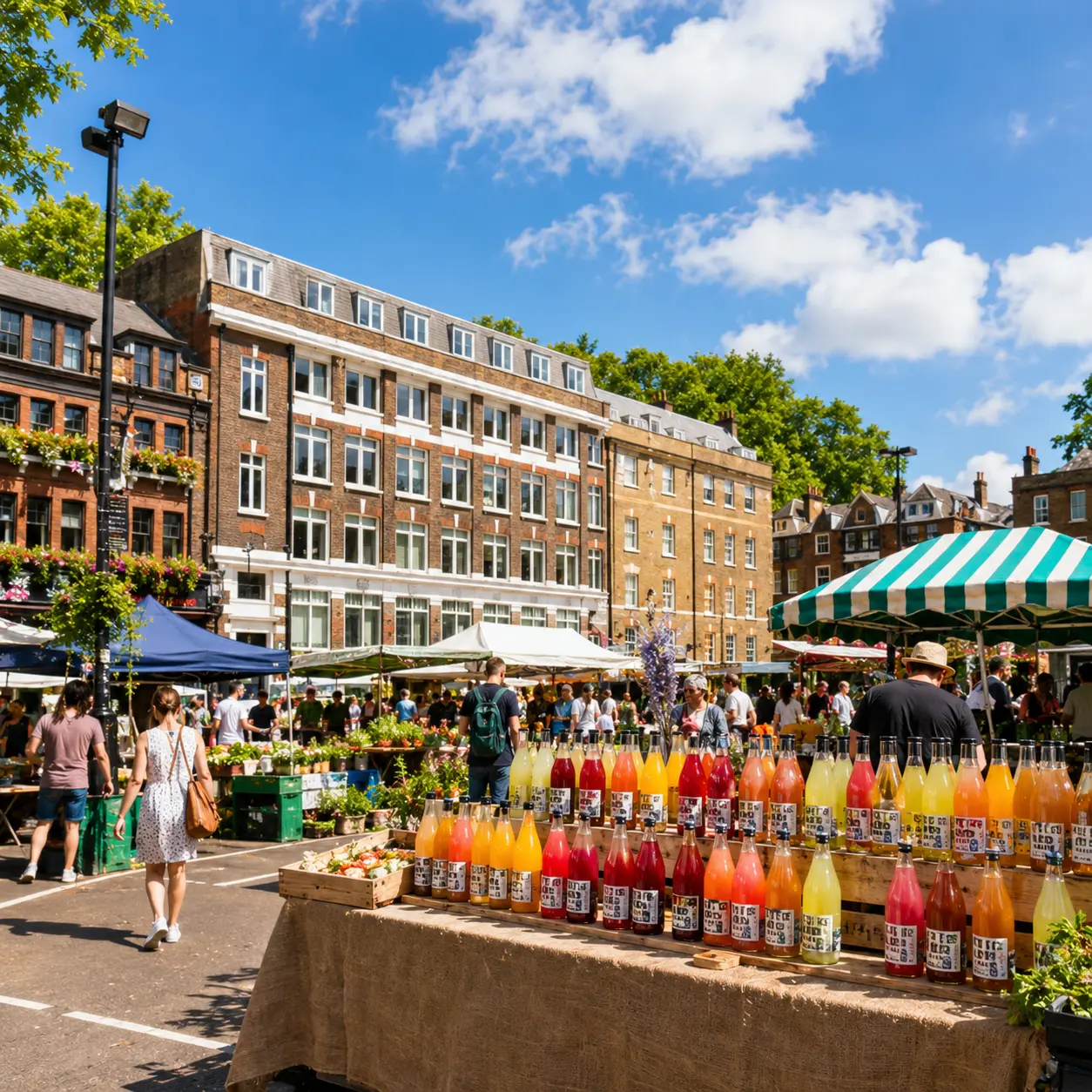
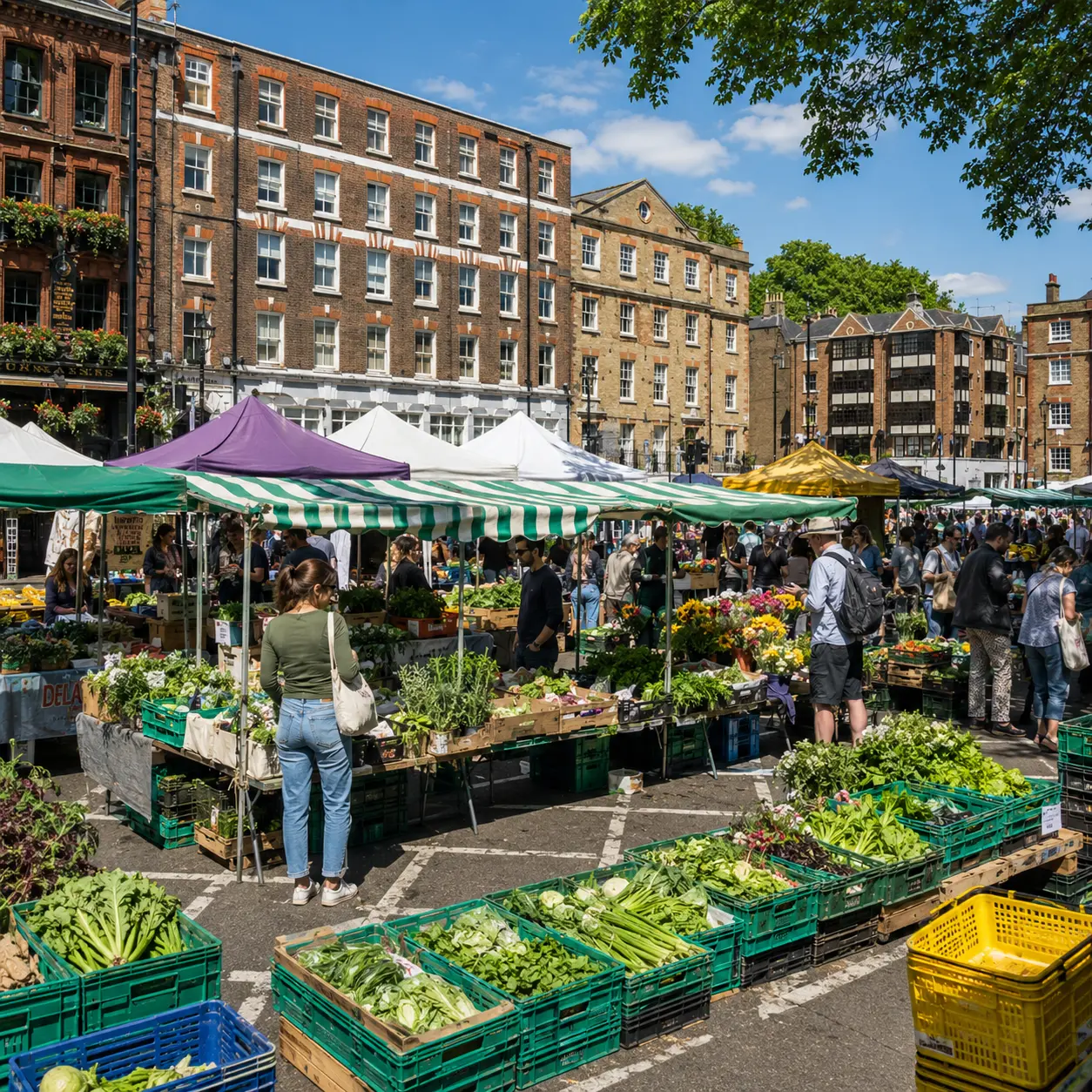
What Is Actually Worth Buying at a London Farmers Market
Buy the things that suffer most in a supermarket supply chain. That means eggs, leaves, soft fruit, tomatoes in season, bread baked that morning and any meat you intend to cook slowly.
Eggs are the clearest demonstration. A supermarket egg may be a fortnight old before it reaches the shelf, and the white has gone loose and watery by then. A market egg laid within 48 hours holds its shape in the pan, and if you have never poached one you will not believe the difference until you do. Leaves are the same argument: a bag of supermarket salad is gassed and washed and has three days of life in it, while a bunch cut on Friday tastes of something.
What is less obviously worth it is anything shelf-stable. Jams, chutneys, oils and hard cheeses are lovely, and you are paying a premium for a story rather than for freshness. Buy them because you want them, not because you think you are outsmarting a supermarket. On slow-cooked meat, the market has a real edge: the cheaper cuts here come from animals that lived longer and moved more, and they behave completely differently in a low oven.
How to Talk to a Producer and Get a Useful Answer
Ask what is good this week rather than what is good. It is a small change and it transforms the conversation, because it gives the producer permission to be honest about the fact that not everything on their table is at its peak.
The follow-up questions that work are specific and practical. When was this picked. What would you do with it. Which of these two would you take home. A grower who is standing behind their own produce will answer all three properly, and will frequently talk you out of the expensive thing and into the better one. That is how you know the certification is doing its job.
The question that gets you nowhere is whether something is organic. Many excellent small producers are not certified, because certification is expensive and slow, and plenty of certified produce is mediocre. Ask how they farm instead. You will learn more in 30 seconds than the label will tell you in a year.
Fun fact: London Farmers' Markets requires every stallholder to have produced what they sell, which is why you will never find a banana on a Marylebone stall.
How Marylebone Farmers Market Fits the Neighbourhood
The market makes sense here in a way it would not in most of central London, because Marylebone still functions as a village with a resident population that cooks. The Cramer Street car park sits a minute from Marylebone High Street, so the market is not an event you travel to; it is the thing you do before lunch.
That proximity has produced a genuine food quarter around it. La Fromagerie on Moxon Street keeps a walk-in cheese room 2 minutes from the stalls. The High Street itself carries the eating end of the equation, with Fischer's at number 50 and Home Marylebone at 79 both within a short walk of your shopping bags.
The Howard de Walden Estate, which owns much of the surrounding streets, has protected that mix deliberately over decades. It is the reason a market selling mud-on carrots can survive 10 minutes from Selfridges, and the reason it has never had to become a street food court to pay its way.
What to Bring and What to Expect
Bring a rucksack, not a tote, and bring cash even though most stalls now take cards. A rucksack matters more than it sounds: you will buy more than you planned, the good stuff is heavy, and you have a walk ahead of you.
Expect it to be outdoors and to feel like it. There is no roof, so a wet January Sunday is a genuinely different experience from a dry May one, and the market is at its best from late spring through autumn when the growers have something to show off. Expect prices at or slightly above a good supermarket for most things, and well below one for seasonal gluts.
Expect, too, to be sold to honestly. Nobody here is pretending. If the tomatoes are not ready, someone will tell you they are not ready, which after a decade of packaging that says handpicked and means nothing is a small but real pleasure.
Conclusion
Treat Marylebone Farmers Market as a shop rather than an attraction and it will change how you cook. Arrive at 10am, buy eggs and leaves and one thing you have never cooked, ask the grower what to do with it, and go home and do exactly that.
The market is not a performance of authenticity. It is a car park in W1 with 20 or so people who drove in before dawn from farms within a couple of hours of London, and it will still be there next Sunday whether or not you photograph it. Cooking from it is like reading the original instead of the summary. Slower, occasionally inconvenient, and impossible to unlearn once you have done it properly.
Continue Reading
The Marylebone Gazette
Delivered weekly to your inbox
Join 12,000+ Marylebone insiders