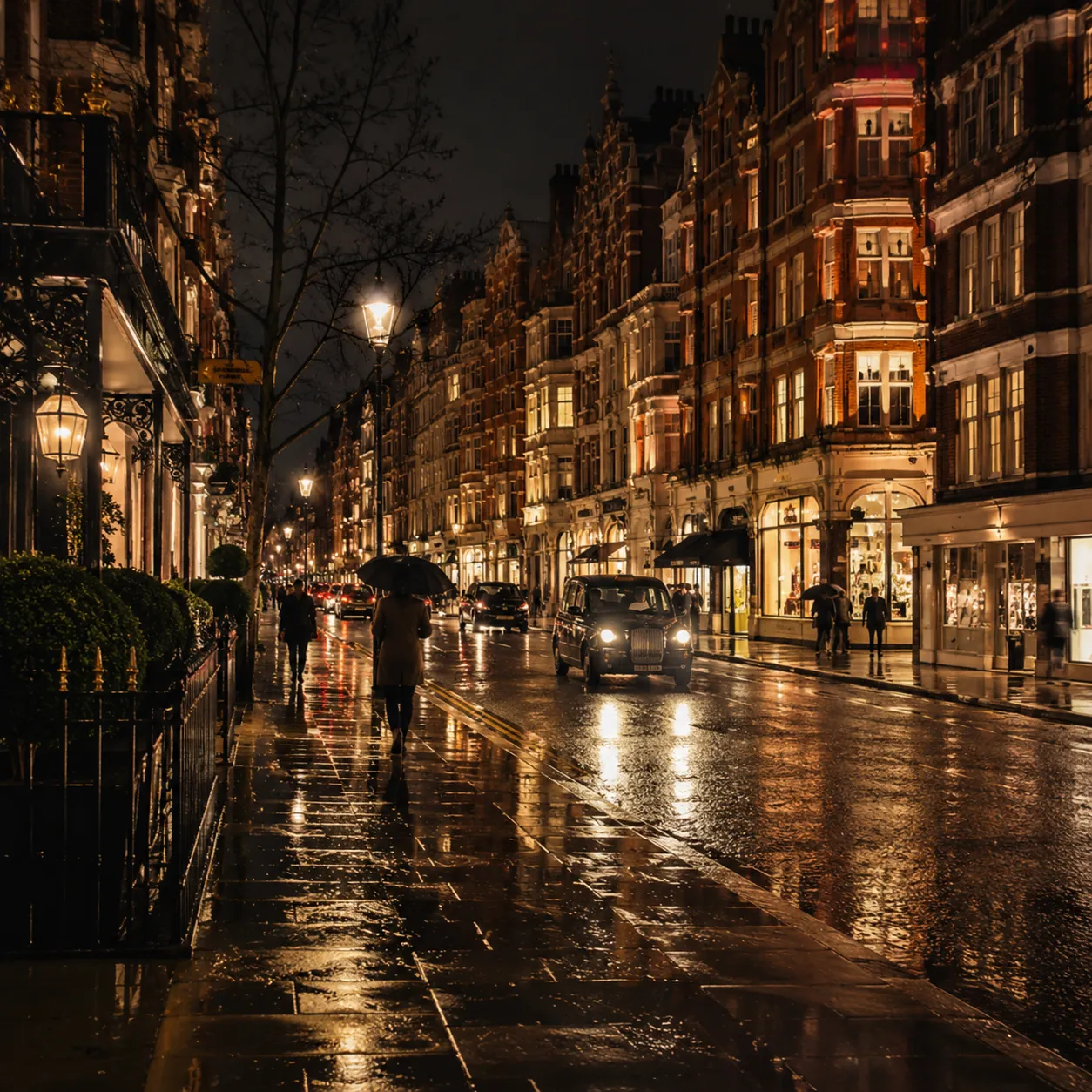
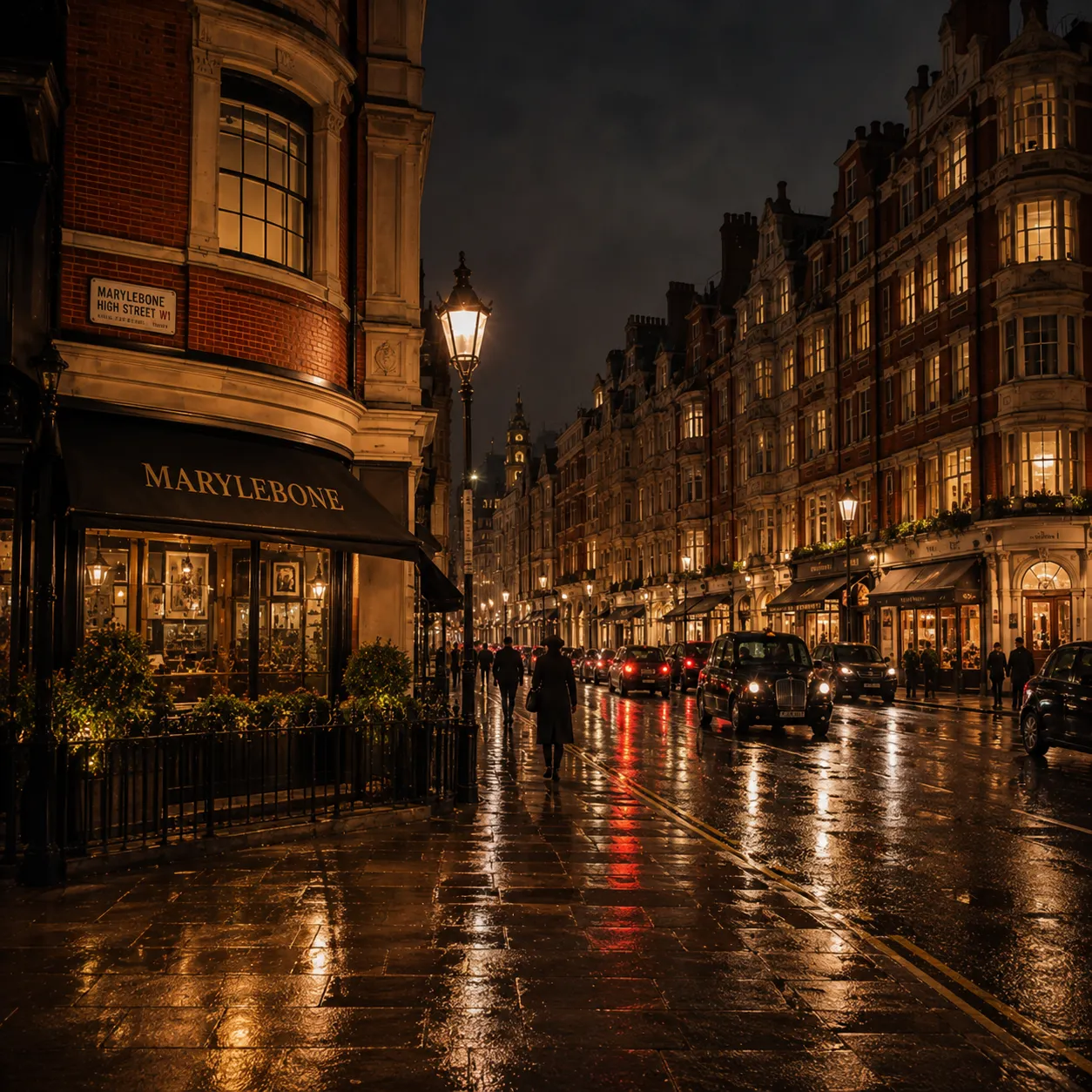
Marylebone works best on foot. Its main sights sit close enough together to cover in a day, yet the district never feels like a checklist built around Tube changes. A sensible route starts at Baker Street, cuts south toward Manchester Square, follows Marylebone High Street, and ends in Regent’s Park. That sequence mixes famous addresses with quieter rooms, independent shops, and open space. The main mistake is trying to force Madame Tussauds, the Sherlock Holmes Museum, the Wallace Collection, a long lunch, and the park into one schedule. Choose one major paid attraction, then let the neighbourhood supply the rest. The route below works throughout the week, while Sunday visitors can also add the farmers’ market.
9:30 a.m.: Baker Street Before the Queues Build
Begin outside 221B Baker Street. The Sherlock Holmes Museum occupies a narrow Georgian townhouse arranged around the fictional detective’s rooms, with Victorian furnishings and references to Arthur Conan Doyle’s stories. It opens daily at 9:30 a.m., and the first entry is the cleanest option for anyone who wants to inspect the rooms without spending the visit in a staircase queue.
Madame Tussauds sits a few minutes away on Marylebone Road. It is a bigger and longer stop, so treating both attractions as compulsory will consume most of the morning. Fans of literary detail should choose Holmes; visitors interested in celebrity displays and large-scale spectacle will get more from the wax museum.
11:00 a.m.: The Wallace Collection Earns the Detour
Walk south to Hertford House in Manchester Square. The Wallace Collection is free to enter and opens daily from 10 a.m. to 5 p.m. Its rooms hold Old Master paintings, French decorative art, furniture, armour, and one of London’s most elegant museum interiors. Fragonard’s The Swing attracts the cameras, but the armouries and furnished galleries give the house its character.
Allow about 75 minutes. The collection is compact enough for a focused visit, yet rushing misses the relationship between the rooms, objects, and paintings.
A Cricket Break Without Losing the Afternoon
Lunch is also when many visitors check the day’s sport. Cricket followers need more than a fixture list because pitch reports, confirmed XIs, weather, and toss information can move prices quickly. Comparing those inputs on betting sites for cricket makes most sense before play or during a natural interval rather than while walking between attractions. Live markets react ball by ball, so a wicket, rain delay, or rising required run rate can reshape the line within minutes. A fixed bankroll and small stakes keep the match as part of the day rather than turning lunch into constant screen time.
Mobile access matters when the schedule is tight. Visitors often want scores, market movement, and bet-slip information on one screen instead of several browser tabs. The Melbet interface lets users inspect pre-match and live markets without returning to a desktop. Useful features are speed, clear settlement rules, and visible odds changes, not the number of wagers that can be made between courses. Checking the match once, then putting the phone away, leaves time for the neighbourhood that brought you here.
1:30 p.m.: Marylebone High Street at Walking Pace
Head north along Marylebone High Street after lunch. Its appeal lies in the street’s scale: independent shops, food stores, cafés, and side roads that feel unusually calm for central London. On Sundays, Marylebone Farmers’ Market runs from 10 a.m. to 2 p.m. around St Vincent Street, Aybrook Street, and the top of Moxon Street.
Daunt Books is the essential stop. Its Edwardian interior has long oak galleries, skylights, and books arranged with a strong emphasis on place and travel. Even a brief visit rewards attention; the rear gallery is more memorable than another hurried souvenir shop.
3:00 p.m.: A Church, Then Open Ground
Continue to St Marylebone Parish Church, a Regency landmark near the northern end of the high street. Check access around services and events, then cross Marylebone Road into Regent’s Park. Queen Mary’s Gardens is the strongest destination inside the park, particularly when the roses are in season, while the broad paths around the Inner Circle provide an easy final walk.
There is no need to push on to Primrose Hill unless daylight, weather, and energy cooperate. Marylebone’s advantage is compression: art, books, architecture, food, and parkland fit into a walkable day without making the visitor race the clock.
Continue Reading
The Marylebone Gazette
Delivered weekly to your inbox
Join 12,000+ Marylebone insiders