The most interesting front doors in Marylebone give nothing away. A polished brass number on a Georgian townhouse facing Portman Square, a uniformed face who already knows your name, and beyond it a world that most of Oxford Street never sees. Marylebone's private members clubs are deliberately quiet about themselves, which is exactly why so many people who would thrive inside them never work out how to get in.
This guide is the practical answer. It covers the two clubs that define membership in this corner of the West End, what each one actually offers, who each one suits, what the application really involves and what it costs in 2026. Both sit within a few minutes of Marble Arch and Bond Street, both occupy restored Georgian houses, and both decide who joins through a membership committee rather than a chequebook. If you have been circling the idea of joining without quite knowing where to start, the steps below remove the guesswork and tell you which door to approach first.
Where Marylebone's Private Members Clubs Actually Are
Marylebone's two defining private members clubs are Home House at 20 Portman Square and Home Grown at 44 Great Cumberland Place. Both occupy restored Georgian townhouses within the Home House Collection, sit a few minutes from Marble Arch and Bond Street, and each was built around a different kind of member.
Neither club announces itself. Home House faces the private garden of Portman Square, a short walk north of Oxford Street, while Home Grown sits behind a quiet doorway on Great Cumberland Place, closer to Marble Arch and Marylebone station. The same group runs both, so a single Collection membership can open both front doors.
They reward different reasons for joining. Home House is a social and cultural club with five bars and a restaurant, the place you join for the evening. Home Grown is a working club for company builders, the place you join for the day. The buildings even feel different, one theatrical, one studious.
What they share is Marylebone itself, a corner of the West End that has always chosen quiet quality over spectacle. The Georgian street pattern that gives the neighbourhood its village character is the same architecture these clubs occupy, which is why a Marylebone members club feels more like a private house than an institution. Before weighing either, picture how membership fits the rest of your day here.
how to spend a perfect luxury day in Marylebone
How to Join Home House on Portman Square
To join Home House, you complete an online application with a recent headshot, photo identification and proof of address, then wait for the membership committee, which meets monthly, to review it. There are no interviews and no panel to appear before, though popularity means a waiting period is normal.
The house is half the reason to join. Number 20 Portman Square was commissioned in 1773 by Elizabeth, Countess of Home, and designed by James Wyatt, architect to George III. After years standing empty it reopened as one of London's most characterful private members clubs in 1998, spread across three Georgian townhouses at numbers 19, 20 and 21, and it has guarded that mix of grandeur and mischief ever since.
Inside there are five bars, a brasserie-style restaurant overlooking the square, a boutique gym, a courtyard garden and 23 bedrooms, each named after a former resident such as the Dukes of Atholl and Newcastle. House 21, the most modern wing, opened in 2010 with sculptural interiors by the late Zaha Hadid, and the late-night Vaults bar beneath it runs until 3am. This is membership built for dinners, parties and the kind of evening that earns its reputation.
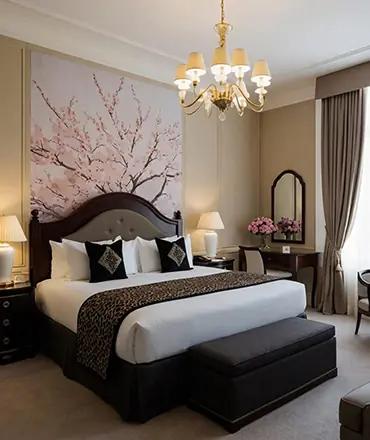
The club also trades on its private spaces. The Octagon Room handles intimate dinners and the Boardroom seats around 20 guests with a treetop view over the square, while the Portman Square garden hosts weddings through the summer and the basement Vaults adds karaoke rooms for the nights that run long. Past guests have included Madonna, who stayed in the Lady Islington Suite while her London home was renovated, which tells you the register the place plays at.
The application itself is refreshingly direct. The committee looks for people who will add to the room rather than names on a list, there is no interview, and the monthly meeting cadence means you should apply well before any event you hope to attend.
Fun fact: From 1932 the mansion housed the Courtauld Institute of Art for nearly sixty years, and its wartime director Anthony Blunt, later unmasked as a Soviet spy, kept his rooms on the top floor.
Why Home-Grown Suits Founders and Entrepreneurs
Home Grown is the Marylebone club for entrepreneurs, investors and business leaders. It opened in April 2019 at 44 Great Cumberland Place, founded by Andrew Richardson, managing director of Home House, and now counts more than 4,500 members across four Grade 2 listed Georgian townhouses.
Where Home House is built for the evening, Home Grown is built for the working day. Members arrive for the Study Cafe, the business lounges and the pitching suites, take meetings on the heated outdoor terrace, then stay for the dining room and the oak-panelled Unicorn Bar. With 35 bedrooms, a founder flying in for a fundraising week can sleep, work and host without once leaving the building.
The community is the product. This club gathers company builders rather than a scene, and the calendar leans toward investor introductions and founder panels rather than celebrity nights. If your reason for joining is to grow something rather than to be seen, Home Grown is the more natural home, and it draws a noticeably international membership of scale-up founders and the investors who back them.
Practically, the club sits across four townhouses on Great Cumberland Place, a few minutes from Marble Arch and Hyde Park. Its application runs through the same Collection team as Home House, so existing members of one can cross into the other more easily than newcomers expect.
The townhouses also take private hire, from sit-down dinners for up to 100 guests to whole-club bookings, so members use Home Grown for milestone events as readily as for Tuesday meetings, and the same front-of-house team that runs the working day turns the rooms over for the evening.


What the Application Really Involves
The application to either club follows the same shape. You apply online, supply a recent headshot, photo identification and proof of address, and for overseas applicants proof of residency, then the membership committee reviews your file at its monthly meeting. No interview is required.
What the published process does not spell out is the wait. Both clubs are popular, the committee meets only once a month, and applications that arrive without a clear sense of why you want in tend to sit longer. A proposer who is already a member helps, as does a profile that fits the club you have chosen, social and cultural for Home House, entrepreneurial for Home Grown.
The committees are not chasing wealth, since the fees already filter for that. They look for fit, for members who will use the rooms, bring interesting guests and add to the events calendar rather than treat the club as a quiet office. Frame your application around how you will take part, not what you can afford, and it tends to move faster.
Two practical moves shorten the path. Apply in a quieter month rather than the autumn rush, when committees face the heaviest volume, and if you can, visit first as a member's guest or, at Home House, as an overnight guest, so you arrive with a genuine sense of the place.
What Membership Actually Costs in 2026
As of 2026, Home House publishes Full Individual membership at 2,250 pounds a year, with a lower rate for members under 35 and a reduced Social tier for evenings and weekends. A combined Home House Collection membership, which opens both clubs, is published at around 3,250 pounds a year.
Those figures cover membership only and sit on top of what you spend inside, so the honest question is how often you will use the club. A member who visits weekly absorbs the annual fee quickly through dinners and meetings that would cost more anywhere comparable. Someone joining for occasional access should weigh the Social tier carefully, since it covers evenings and weekends without the full daytime run of the house and excludes some facilities.
Home House also publishes reduced rates for members under 35, for overseas members and for corporate groups, so the right tier depends on your age, your base and whether colleagues will join too. Home Grown prices largely by application, reflecting its founder and corporate focus, and member bedroom rates start below the public rate, from roughly 235 pounds a night at the time of writing.
Published costs move, sometimes more than once a year, so treat any figure here as a guide and confirm the current rate with the club before you apply. Building a year's decision on last season's number is the easiest mistake to make and the easiest to avoid.
How to Choose Between the Two Marylebone Clubs
Choose Home House if you want social, cultural and late-night life across five bars and a restaurant on Portman Square. Choose Home Grown if you want a working community of founders and investors. Many people who can justify both simply take the Collection membership and use each for its strength.
Be honest about the split in your week. If roughly 70% of your visits would be social, cultural or late, Home House earns its fee. If most would fall in working hours, around meetings and quiet desks, Home Grown does. A member-funded publication rarely steers you toward one club over another, because it depends on both for revenue, which is exactly why an independent recommendation is worth more here than a polished listing.
For the genuinely undecided who can justify the cost, the Collection membership removes the choice, opening Home House for the evening and Home Grown for the day. Whichever you pick, think about what frames the visit, since a club night pairs naturally with a table nearby and a working day often ends with dinner a few streets away.
Marylebone's finest private dining rooms
If you have decided to apply, the next steps are simple. Prepare a recent headshot, photo identification and proof of address, start the online application for whichever club fits your life, and expect the membership committee to take a few weeks, since it meets monthly. If you are still undecided, book a room at Home House first, because non-members can stay and use the facilities for the duration of a visit, which is the cheapest way to test whether a club suits you before you commit a year's fee. Treat the choice the way you would a new home rather than a purchase, because that is what Marylebone's private members clubs are designed to be. To plan the rest of the day around your visit, start here.
Continue Reading
The Marylebone Gazette
Delivered weekly to your inbox
Join 12,000+ Marylebone insiders