Everyone who comes to look at art in Marylebone goes to the Wallace Collection, and they are right to. What almost nobody does is walk the 10 minutes north or west afterwards, which is where the art galleries in Marylebone that actually sell work, take risks and know your name are quietly getting on with it.
This is not a gallery district in the way that Cork Street or the streets around Savile Row are gallery districts. There is no run of plate glass and no press night circuit. Marylebone's galleries are scattered, small and mostly on residential corners, which means you will not stumble across them. You have to want them, and that is precisely why the people inside them are willing to talk to you.
I have spent 5 years reviewing culture across London and narrowed my beat to the stretch between the Wallace Collection and Regent's Park, largely because this is the part of central London where you can still walk into a gallery on a Wednesday afternoon and end up in a 20 minute conversation with someone who knows the artist personally. What follows is where those places are, what each is genuinely good for, and how to visit without feeling like you are trespassing.
Where to Start With Art in Marylebone
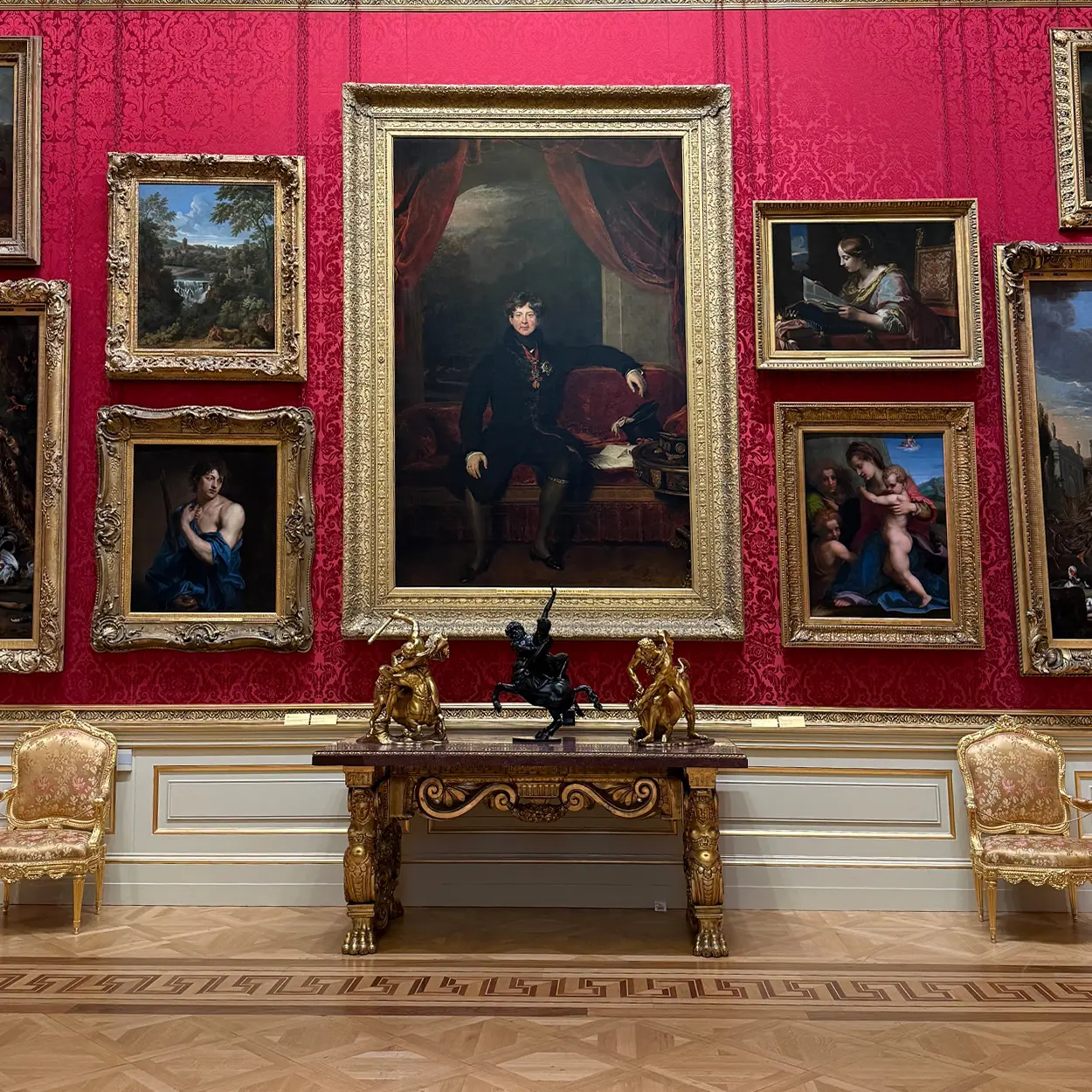
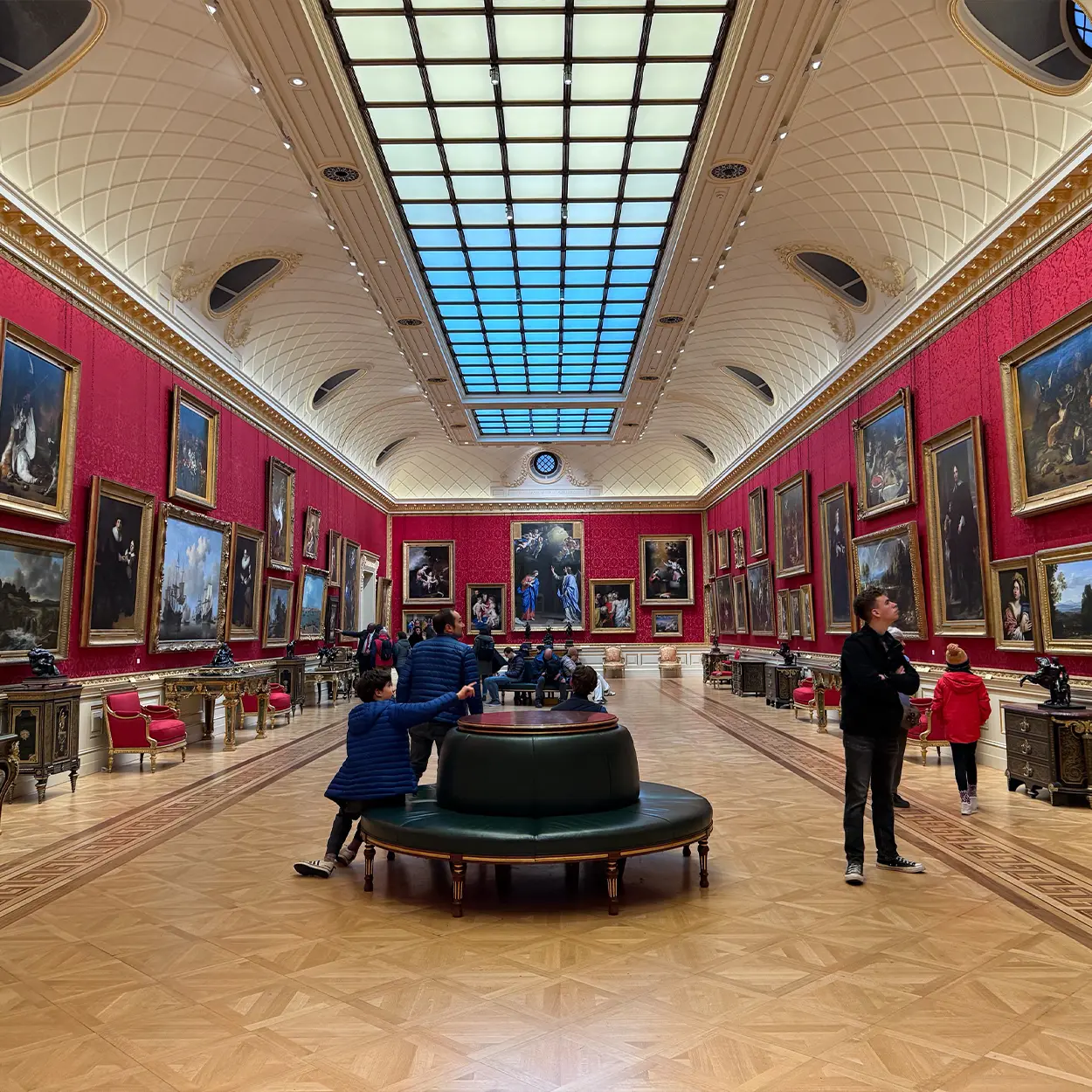
Start at Hertford House on Manchester Square. The Wallace Collection is a national museum inside a private house, entry is free, and it is the single best argument for the neighbourhood as a place that takes pictures seriously.
What makes it useful as a starting point is that it is not arranged like a museum. Armour, Sèvres porcelain, Rembrandts and Fragonard's The Swing sit in rooms that still behave like rooms, with furniture and light and the awkward corners of a house someone lived in. You read the paintings differently when they are hung above a fireplace rather than in a white cube, and after an hour of it your eye is calibrated for everything else on this list.
The glazed courtyard at the centre is one of the few genuinely quiet places to sit in the West End. Give it an hour, then leave and go looking for work you can actually buy.
Which Marylebone Galleries Are Worth Seeking Out
Four galleries do the real work here, and none of them are on a main road. Thompson's Gallery at 3 Seymour Place is the one to try first, showing contemporary British painting and sculpture in a space small enough that you will speak to whoever is on the desk.
Contemporary Applied Arts at 6 Paddington Street is the most distinctive of the group, because it deals in craft rather than pictures. Ceramics, glass, jewellery, wood and textiles by makers rather than artists, which is a distinction the art world enforces and the public sensibly ignores. It is the best place in the neighbourhood to buy something beautiful for a sum that does not require a conversation with a bank.
Rhodes Contemporary Art at 65 Great Portland Street sits at the edge of the area and leans towards modern and urban work, with a programme that turns over often enough to be worth checking before you walk. And up on Church Street in NW8, Bookery Gallerie at number 20 is the outlier, tucked into a street better known for antiques, which makes it a natural pairing with an afternoon spent digging through Alfies Antique Market a few doors down.
Why Marylebone Never Became a Gallery District
Marylebone has the wealth, the walk-in traffic and the Georgian ceilings, so the absence of a gallery row is a genuine curiosity. The answer is the estates. The Howard de Walden and Portman estates own most of these streets and let them with a view to a working neighbourhood rather than to a single trade.
That policy is why a chemist, a fishmonger and a bookshop still share a high street 10 minutes from Selfridges. It is also why no street here ever filled up with dealers the way Cork Street did in the 20th century, when a critical mass of galleries clustered around the Royal Academy and fed off each other's openings.
The trade-off is real. Marylebone lost the buzz of a gallery district and kept its balance. For a visitor that means you cannot do 8 galleries in an afternoon here, and it also means the 4 you can do are not competing for the same collector, so their programmes have almost nothing in common. That is a better afternoon than it sounds.
Fun fact: The Wallace Collection cannot lend its works or acquire new ones, under the terms of the 1897 bequest that gave it to the nation.
Where Else to Find Art in Marylebone
Two institutions extend the day well beyond the commercial galleries, and both are free. The Royal Academy of Music on Marylebone Road keeps a museum with a collection of stringed instruments, and standing in front of a violin made 300 years ago while a student rehearses somewhere above you is a particular kind of good afternoon.
The Royal Institute of British Architects at 66 Portland Place is the other. The building itself is the exhibit, a 1930s statement in Portland stone with a staircase that architects make pilgrimages for, and its gallery programme covers architecture and design with more rigour than most commercial spaces manage.
Add Church Street in NW8 if you have half a day. The antiques trade there operates on completely different rules from the gallery world, and an afternoon of both, roughly 25 minutes' walk apart, tells you more about how objects acquire value than any single exhibition will.
How to Visit a Small Gallery Without Feeling Awkward
Walk in. That is the entire technique, and the anxiety about it is the single biggest barrier between the public and small galleries. Nobody is going to ask you to buy anything, and the person at the desk is usually bored.
The practical notes matter more than the etiquette. Most independent galleries here open roughly 10am or 11am to 6pm, Tuesday to Saturday, and many close between shows, so a gallery can be dark for a fortnight with no warning on the door. Check before you travel. Some of the smaller spaces work by appointment during installation weeks, and they will almost always say yes if you ask.
If you want to know the price of something, ask. Prices are on a list at the desk rather than on the wall, which reads as secrecy and is actually just convention. And if you like a piece and cannot afford it, say so; galleries keep lists, artists make editions, and the conversation costs nothing.
Conclusion
The art galleries in Marylebone will not give you the volume of a gallery district, and that is the point of them. Four independents, one extraordinary house museum, an architecture institute and a music academy, spread across a neighbourhood you can cross in 20 minutes on foot.
Do the Wallace Collection first to sharpen your eye, then Seymour Place and Paddington Street for work you could live with, then Church Street if the weather holds. Looking at art here is less like visiting a museum and more like being lent someone's front room for an hour. Take the hour. Nobody is watching, and the person at the desk would genuinely rather talk to you than to their laptop.
Continue Reading
The Marylebone Gazette
Delivered weekly to your inbox
Join 12,000+ Marylebone insiders