The most consequential shopkeeper in Marylebone does not run a shop. The Howard de Walden Estate is the landlord for much of the district, including the stretch it brands Marylebone Village, and its decisions about who gets a lease explain why Marylebone High Street looks the way it does: a run of independents and first-to-London names where a market left to itself would produce phone shops and chain coffee. Most coverage treats the street’s character as an accident of taste. It is closer to an editorial policy, executed through leases, inside W1U in the City of Westminster, at the northern edge of the West End. This article sets out who actually decides what opens here, how a letting works, what the estate is building through 2026, and how to read the street once you know it is being composed rather than merely occupied.
Who Decides What Opens on the High Street
Tenant selection on and around Marylebone High Street rests with the Howard de Walden Estate, the property company that owns most of the street and its surroundings. Brands are placed to complement rather than duplicate one another, which is why the street reads as a sequence instead of a scrum.
The Howard de Walden Estate is not a recent arrival exercising new money: its family holdings in this quarter of London go back generations, which is part of why it can plan in decades where an ordinary commercial landlord plans in rent reviews. The estate says so itself, in plainer language than landlords usually risk. Announcing a round of lettings, its head of retail, Rob Kirk, described a commitment to a diverse mix of retailers serving residents and visitors alike, and reported demand running at "double-digit offers on Marylebone High Street". The phrase worth noticing is mix: the Howard de Walden Estate treats the street’s line-up the way an editor treats a contents page, balancing fashion against food, established names against first arrivals. A knitwear label will not find itself next to three other knitwear labels, because the landlord has already decided the street needs a perfumer there instead.
How a Letting Actually Happens
The process runs in an order that surprises brands used to bidding wars. A unit rarely reaches the open market in the ordinary way: the estate works with appointed leasing agents and its own in-house team, and vacancy is scarce enough that in 2025 the estate reported no shop units available to let, with competing offers arriving for prime frontages. Interest is registered long before a lease ends. When space does appear, the conversation is as much about fit as covenant: what the brand adds that the street does not already have, how it trades through winter, what its shopfront does to the run of Georgian frontages.
The recent intake shows the policy in motion, with dates attached. Luxury leisurewear label Derek Rose, headquartered in Marylebone for over a decade, took 39 Marylebone High Street. Danish fashion brand Ganni took the former Aesop unit at number 69. Footwear label Flabelus took a 466 sq ft shop at number 45, and Space NK, on the street for more than 25 years, tripled its store to around 2,800 sq ft in 2025. Off the main run, the Platform concept store took 1,818 sq ft at 49 Marylebone Lane. None of these placements duplicates a neighbour, which is the fingerprint of a managed street.
The Village That Did Not Happen by Accident
The common assumption runs that Marylebone kept its independent character while other districts lost theirs, as if character were a matter of luck or postcode virtue. The record says otherwise. A single landlord controlling most of the street can refuse the highest bidder, hold rents to the tenant it wants, and move pieces around its own board: when the estate began its redevelopment at the top of the High Street, the homes affected were relocated within the Howard de Walden Estate’s own portfolio rather than lost. That is not how an open market behaves. It is how a composed one behaves.
Fun fact: The Howard de Walden Estate’s Marylebone holdings cover roughly 95 acres of central London, and in 2025 the estate reported no shop units available to let anywhere on them.
The correction matters because it changes what a visitor is looking at. The absence of duplicate trades, the survival of a specialist cheesemonger and an independent bookshop on some of the most valuable retail frontage in the City of Westminster, the arrival of first-to-London stores rather than tenth-in-London ones: each is a decision with a decision-maker. Admiring the street without noticing the estate is like admiring a page and ignoring the editor.
What the Estate Is Building Through 2026
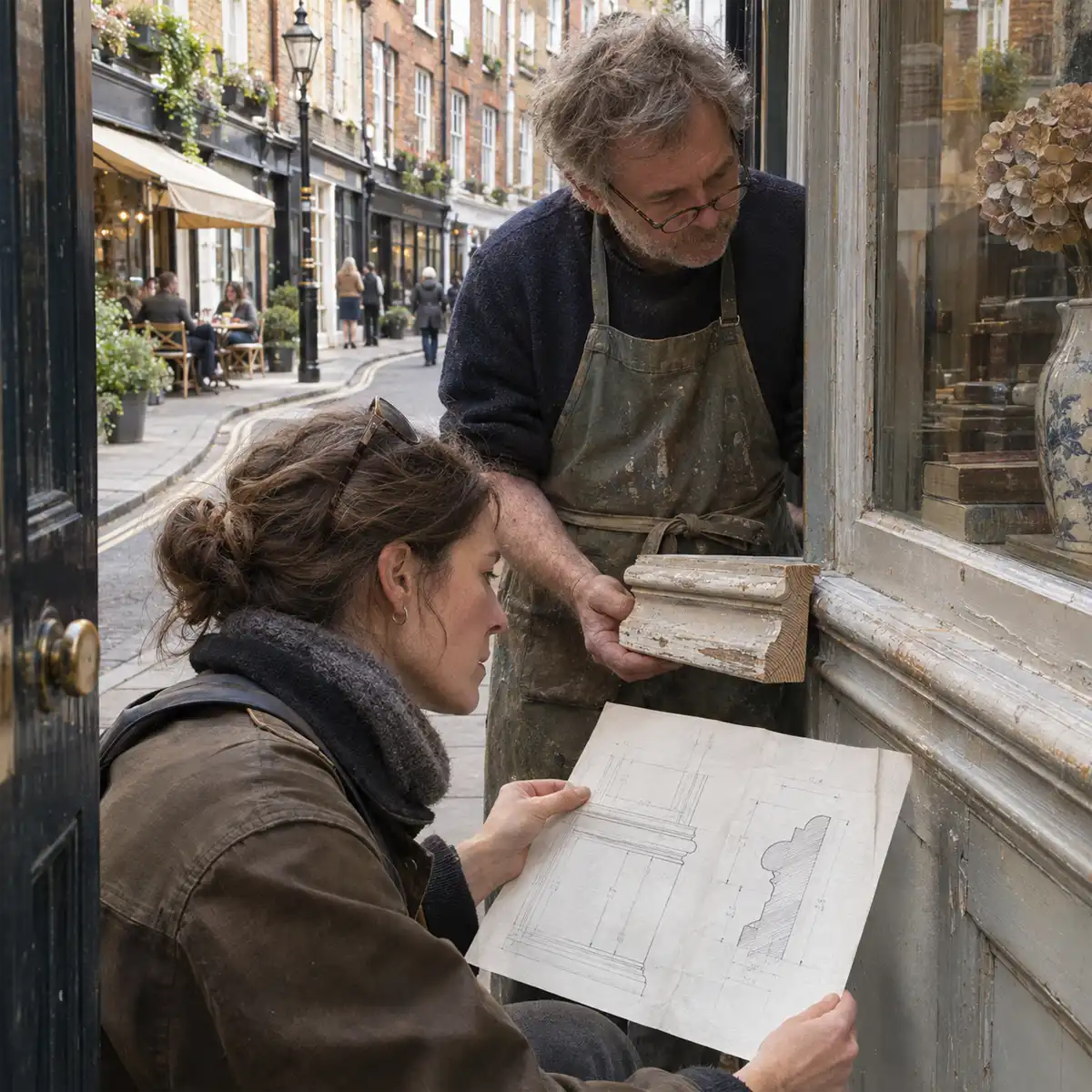
The visible project is at 1 Marylebone High Street, where a redevelopment that began in January 2026 is scheduled to run around 15 months. The scheme, designed by Holt Architecture, extends the building to add roughly 30% more lettable space, tops it with a roof terrace and pavilion, and keeps the ground floor for retail and leisure.
The budget tells its own story about intent: reported at £9m when work started in January 2026 and at £12m by August, the project converts upper floors to fully fitted offices of around 2,500 sq ft each while the two ground-floor retail units are refreshed. For the street, the practical meaning is a corner of the High Street behind hoardings into 2027, and then two prime units returning to the mix. Given the letting pattern above, whoever takes them will have been chosen to add a category the street lacks, not to outbid the rest, and the estate’s stated appetite for a broad range of occupiers suggests the balance of shops to workspace at the top of the street is being reweighted deliberately.
Reading the Street Once You Know
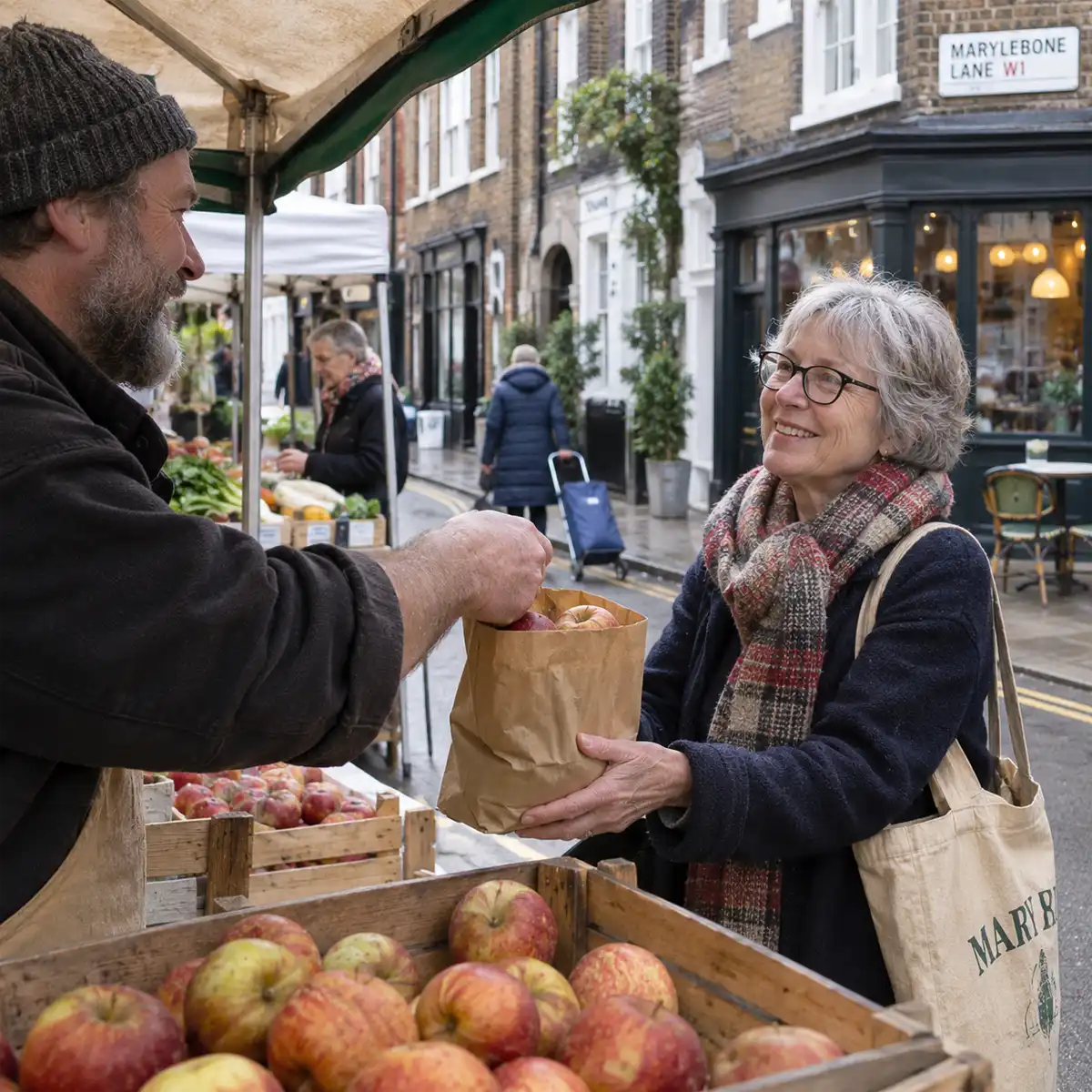
The practical payoff of understanding the landlord is knowing how to use the district. Openings arrive in deliberate clusters rather than at random, so a visit every few months genuinely turns up new doors, and a first London store here signals a brand the estate courted rather than one that simply paid most. Weekday mornings show the composition best, when the High Street trades at resident pace before visitors arrive from Oxford Street’s back streets to the south. Sundays add the farmers’ market in the Cramer Street car park behind Waitrose, a fixture the estate’s tenant mix is built to sit alongside rather than compete with. And the side turnings are part of the score: Marylebone Lane’s smaller units, on the medical district’s W1G flank a few streets east, are where the estate places concepts too young or too specialist for the main frontage. Watch those first if you want to see next year’s High Street early. The estate also publishes its own projects and letting news on its website, which is the primary source much of this article draws on and the best early-warning system a shopper can have: the Howard de Walden Estate announces its arrivals before the hoardings come down, and reading it turns a browse into a schedule.
The one thing to take from all of this is that Marylebone Village is authored, and the author signs its work in leases rather than bylines. For a visitor, that authorship is why an afternoon here does not repeat itself; for a brand, it is why the route in runs through a conversation with the Howard de Walden Estate rather than an auction; for a resident, it is why the butcher and the bookshop are still there while the rents around them are among the strongest in the City of Westminster. Judge the street as a composition and it makes sense at every address. The decision it leaves you with is simple: come back each season, because the editor keeps revising the page.
Continue Reading
The Marylebone Gazette
Delivered monthly to your inbox
Subscribe for the latest from Marylebone.